
Best AI in Robotics 2026: The Rise of Humanoid Assistants

Best AI in Robotics 2026: The Rise of Humanoid Assistants

I recently watched footage of a humanoid robot performing complex household tasks, and it genuinely made me reflect on how quickly this space has moved. By mid-2026, robots are no longer just industrial machinery in factories – they’re becoming more capable of operating in unstructured environments around people. I’ve been researching how physical AI agents are being integrated into manufacturing, healthcare, and logistics settings. This guide on AI in robotics 2026 covers what’s genuinely happening, alongside realistic context about where the technology still has significant limitations.

AI in Robotics 2026: General-Purpose Humanoid Robots

The most talked-about development in AI in robotics 2026 is the maturity of general-purpose humanoid robots. Companies including Tesla (with its Optimus platform), Figure, and Boston Dynamics have continued advancing robots capable of navigating complex environments and handling a wider variety of objects than previous specialized industrial robots.

The genuine progress is real: current humanoids can learn new manipulation tasks faster than earlier generations, handle more varied object types, and operate more reliably in less controlled environments. It’s worth being accurate about the current state though: these systems still require significant setup, controlled conditions, and human oversight for reliable operation. The “watches a human once and learns perfectly” framing oversimplifies what’s actually a carefully managed learning process. For current status on specific platforms, Boston Dynamics’ own documentation gives a reliable picture of what their systems actually do.

AI Robots in Healthcare and Elderly Care

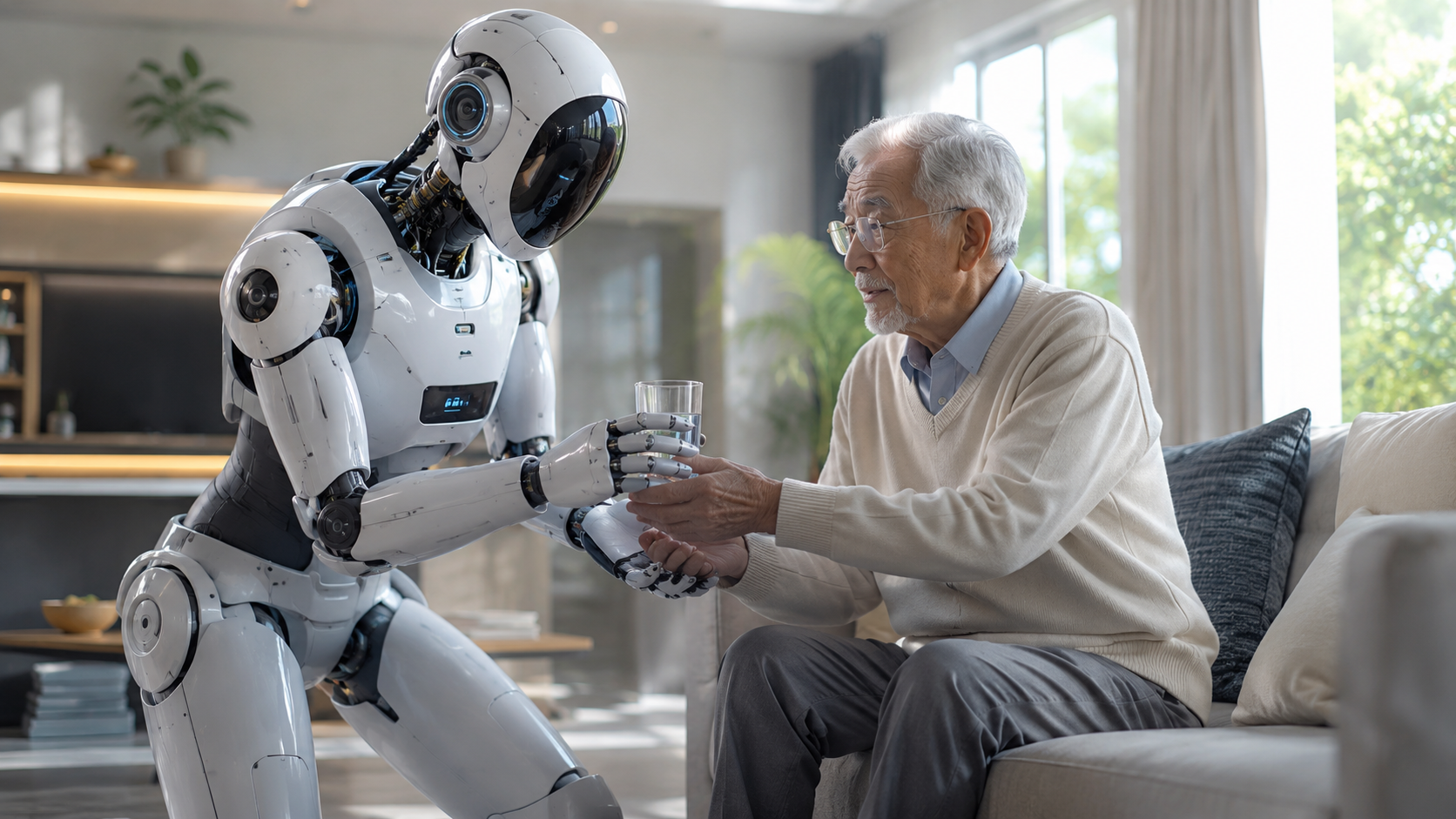
As we discuss in our AI in Healthcare guide, robotics is playing a growing role in healthcare settings. AI-assisted robotic systems for surgical support, physical therapy, and logistics within hospital environments (like medication delivery and sample transport) are in active real-world use. Companion robots for elderly care are a growing area, with documented positive effects on social engagement and daily activity reminders in care facility settings.

The honest scope caveat is that widespread deployment of capable robotic assistants in home elderly care settings is still developing rather than standard practice. The most reliable current implementations are in controlled institutional settings with trained staff rather than fully autonomous home care.

Autonomous Manufacturing and Cobots

Manufacturing is where AI in robotics 2026 has seen the most mature, widely deployed real-world impact. Collaborative robots or “cobots” designed to work safely alongside human workers have expanded significantly in adoption, particularly in assembly, quality inspection, and materials handling. These systems genuinely increase throughput and reduce physically demanding or repetitive work for human workers.

The productivity improvements from cobot adoption are real, though specific multiplier claims like “400% increase” vary enormously by application, baseline, and implementation quality. The more accurate framing is that cobots provide meaningful throughput improvements for specific tasks while also improving ergonomics and reducing injury risk for workers in physically demanding roles.

AI-Driven Drone Logistics

Drone-based last-mile delivery has expanded in AI in robotics 2026, with commercial deployments in several markets. The AI agent orchestration principles that coordinate multi-drone operations are genuinely being applied to route optimization and collision avoidance. In India specifically, regulatory frameworks for commercial drone delivery are still developing, which affects the pace of adoption compared to markets with more established drone delivery regulations.

Drone logistics work best for specific use cases: lower-weight packages, areas where ground delivery is logistically difficult, and time-sensitive deliveries where the economics justify the current cost premium. Universal drone delivery replacing conventional logistics is still a future direction rather than current reality.

Advanced Vision and World Models

The vision systems powering current humanoid robots in AI in robotics 2026 have improved significantly. Modern robots increasingly use what researchers call “world models” – internal representations of physical space that let them reason about objects, anticipate how they’ll behave when moved, and plan manipulation tasks more effectively. This is why current robots handle object variety better than previous generations.

The kitchen robot example is directionally accurate: current systems are meaningfully better at adapting grip strength and handling approach to different object properties. The caveat is that performance still degrades significantly for novel objects or unusual situations that fall outside training distributions, which is why human supervision remains important for safety-critical applications.

Security and Privacy for Home Robots

As robots become more present in homes and care settings, the security and privacy implications are genuinely significant. Robots with cameras and microphones operating in private spaces generate sensitive data, and the security of that data, how it’s transmitted, stored, and who has access, matters enormously. Understanding the data handling practices of any home robot platform before adoption is as important as understanding its physical capabilities. As we discuss in our Personal AI Hardware guide, these considerations apply across the broader category of always-on home AI devices.

What This Means for India

For Indian businesses and consumers, the most immediately relevant AI in robotics 2026 developments are in manufacturing automation, where adoption is growing in sectors like automotive, electronics, and pharmaceuticals. Drone delivery is at an earlier stage given the regulatory environment. Healthcare robotics in major urban hospitals is growing. Home humanoid robots remain a longer-term development for most Indian households.

Conclusion

AI in robotics 2026 represents genuine and significant progress toward more capable, flexible robots operating in a wider range of environments than was possible just a few years ago. The honest summary is that the technology is advancing rapidly while the most autonomous, fully reliable versions of the “humanoid assistant in every home” vision are still years rather than months away from mainstream adoption. At aitutorial.in, we’ll keep covering these developments practically. Check our list of Best AI Agents 2026 to see how the software intelligence side connects to these physical robotic systems.

Leave a Comment