
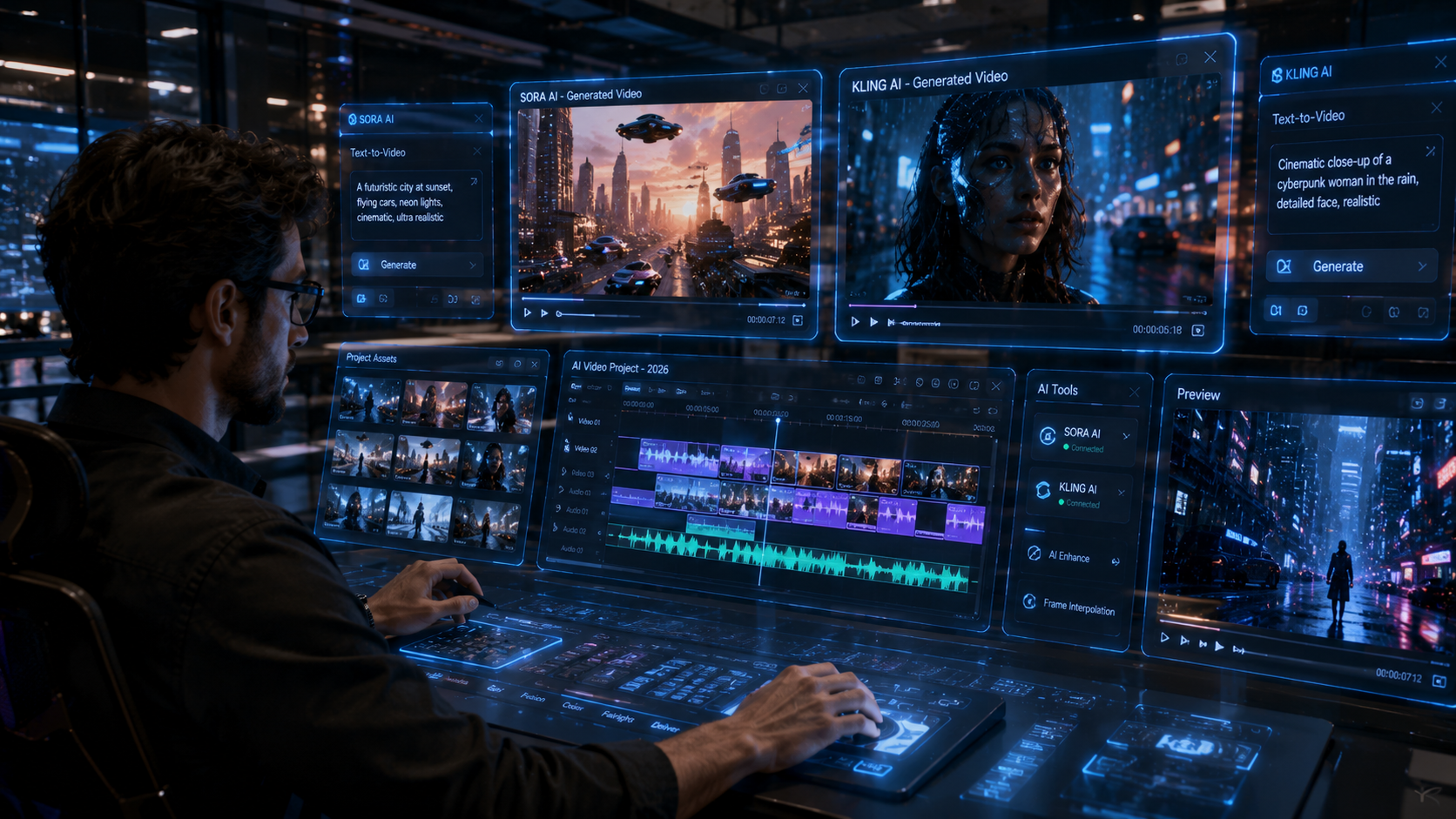
Best AI Video Generators 2026: Creating Cinematic Clips
If you’d told me a couple of years ago that I could generate a short cinematic video scene just by typing a description, I probably wouldn’t have believed you. By mid-2026, text-to-video AI has clearly moved from novelty to genuinely useful creative tool, even if it hasn’t fully solved every challenge professionals care about, like consistent physics and character continuity across longer scenes. I’ve spent the last few weeks testing several leading tools to see how they actually hold up for real creative work, not just short viral clips.
Today, I’m sharing my honest take on the best AI video generators 2026 has to offer, based on hands-on testing rather than press releases. This isn’t about hype; it’s about which tools are genuinely useful for creators in India and beyond who don’t have a big-budget production team behind them.
Best AI Video Generators 2026: OpenAI’s Sora
OpenAI’s Sora remains one of the most talked-about tools in this space, known for its ability to generate coherent video scenes from text prompts. Sora has continued to improve in areas like scene consistency and motion realism, though like all current text-to-video tools, it still has limitations with complex physics, fine details, and maintaining perfect character consistency across longer generations. For the latest on what Sora can actually do, OpenAI’s own announcements are the most reliable source, since capabilities and access continue to evolve.
Kling AI: Strong Motion and Camera Control
Kling AI has built a strong reputation for handling complex human movement and facial expression generation well. Many creators appreciate its camera control features, which allow more directorial input over how a generated scene is framed and moved through, something that’s historically been hard to control precisely in AI video tools. As with any fast-evolving tool in this space, it’s worth checking the platform’s own documentation for current capabilities rather than relying on older reviews.
Runway: Professional Editing Integration
Runway has positioned itself differently from pure generation tools by integrating AI video capabilities directly into a professional editing workflow. Features like object-specific motion control have made it a popular choice among editors who want to blend AI-generated elements with real footage rather than relying entirely on AI-generated scenes. This hybrid approach tends to produce more polished, professional results than fully AI-generated video alone.
Luma: Speed and Accessibility
Luma has focused heavily on making AI video generation fast and accessible, which makes it a popular choice for social media content where quick turnaround matters more than frame-perfect cinematic quality. Its ability to animate a single photo into a short video sequence is a particularly useful feature for marketers and social media managers working on tight timelines.
Pika: Animation and Voice Sync
Pika has carved out a niche in AI-assisted animation, with features focused on lip-sync and voice-driven animation. This makes it a solid option for creators working on animated explainer content or marketing videos with voiceover, where syncing visuals to audio used to require much more manual animation work.
The Responsibility That Comes With AI Video
As the line between AI-generated and camera-captured footage continues to blur, the responsibility to label AI-generated content clearly is becoming more important, not less. As we discussed in our AI ethics guide, transparency about AI involvement in video content matters both for audience trust and, increasingly, for platform compliance, as more platforms roll out labeling requirements for synthetic media.
How AI Video Tools Are Changing Digital Marketing
AI video generation has become a genuinely useful part of digital marketing workflows this year. Agencies are increasingly using these tools to produce social media ad variations faster and at lower cost than traditional shoots, which allows for more A/B testing of different visual styles within a campaign. It’s worth being honest that results vary significantly by industry and audience, AI-generated video tends to work better for certain product categories and styles than others, so it’s not a universal replacement for traditional video production, especially for brand campaigns that need precise, polished visuals.
What This Means for Creators Choosing the Best AI Video Generators 2026
If you’re a creator deciding which tool to start with, it’s worth trying the free or low-cost tiers of a couple of these tools on your actual project type before committing to a paid plan, since strengths vary a lot by use case, motion-heavy content, animation, fast social clips, or professional editing integration.
None of these tools fully replace traditional production for high-stakes professional work yet, but they’re genuinely useful for prototyping, social content, and lower-budget creative projects. For Indian creators specifically, the cost savings compared to traditional video production can be significant enough to make ambitious creative projects financially viable that simply wouldn’t have been possible a couple of years ago.
Conclusion
AI video generation has moved well past gimmick status into a genuinely useful creative tool for the best AI video generators 2026 has to offer, even if it hasn’t fully replaced traditional production for professional work.
The best AI video generators 2026 has to offer each have different strengths, and picking the right one depends on what you’re actually trying to create rather than which tool has the most impressive demo reel online. A tool that’s perfect for fast social media clips might be the wrong choice entirely for a polished brand campaign, and vice versa.
At aitutorial.in, we’ll keep testing these tools as they evolve and sharing honest comparisons rather than just repeating marketing claims. Check our Midjourney prompts guide for creating high-quality images you can turn into video using these same tools.