
Best AI for Small Business 2026: Practical Tools for Local Shops
I recently had a conversation with a local shop owner here in Gujarat who was worried about being left behind by larger e-commerce platforms. It made me realize that some of the most useful applications of AI aren’t happening in big tech labs, they’re showing up in practical, affordable tools that local businesses can actually use. The gap between what big retailers can do and what a small shop can do is genuinely narrowing this year.
I’ve been researching affordable automation tools that don’t require a dedicated IT team to run. In this guide on AI for small business 2026, I want to share practical, budget-friendly strategies I’ve seen work for real local entrepreneurs who want to grow their reach while staying rooted in their community.
AI for Small Business 2026: Customer Engagement via WhatsApp
For small businesses, communication speed matters a lot. One of the more practical applications of AI for small business 2026 is the use of WhatsApp-based AI agents that can handle common customer inquiries, take basic orders, and provide product recommendations around the clock in local languages like Gujarati and Hindi. As we discussed in our AI in customer support guide, these agents work best for routine, repeatable questions, freeing up the owner’s time for more complex customer interactions that actually need a human touch.
Smart Inventory and Stock Prediction
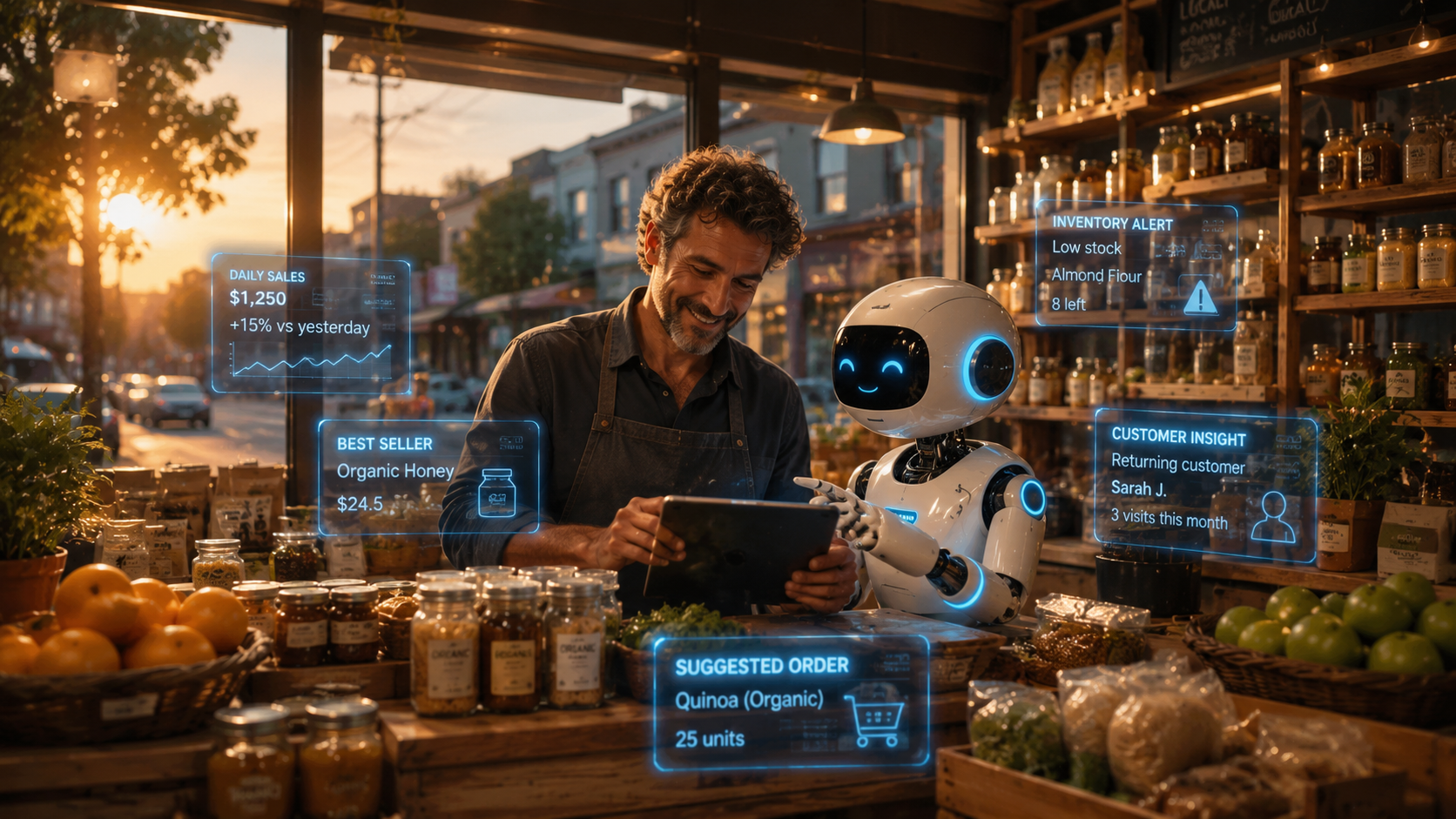
Managing stock is often one of the biggest headaches for small business owners. AI for small business 2026 tools increasingly use sales history and seasonal patterns to help predict what’s likely to sell well in the coming weeks, which helps avoid both stockouts and excess inventory tying up cash. Some tools can also flag low-stock items automatically so reordering doesn’t fall through the cracks during busy periods.
It’s worth noting these tools work better the longer you use them, since they rely on building up sales history specific to your shop. Don’t expect highly accurate predictions in the first few weeks of using a new tool, the real value tends to show up after a season or two of consistent use, once the system has enough of your actual sales patterns to learn from.
Hyper-Local AI Marketing
Small businesses are increasingly using AI tools to run more targeted, affordable ad campaigns instead of broad, expensive marketing pushes. AI for small business 2026 tools allow for genuinely local targeting, letting you create simple video ads using tools like the ones we cover in our AI video generator guide and show them specifically to people near your shop’s location. This kind of precision targeting tends to stretch a limited marketing budget considerably further than generic advertising.
AI-Assisted Bookkeeping and Financial Tracking
Basic financial management has become more accessible to small business owners through AI-assisted bookkeeping tools. These can help track expenses, generate simplified tax-ready summaries, and give a rough sense of upcoming cash flow based on current trends. As mentioned in our AI in finance guide, these tools are genuinely useful for staying organized, though for anything beyond basic bookkeeping, like actual tax filing or major financial decisions, working with a qualified accountant is still the right call.
The Advantage of Combining Personal Touch with AI
The real strength of a small business has always been the personal relationship with customers, and AI for small business 2026 tools can actually reinforce that rather than replace it. Tools that help you remember a regular customer’s preferences and past purchases, similar to the kind of persistent context covered in resources on AI memory systems, can help small businesses offer a more personalized experience at scale, something larger, impersonal platforms genuinely struggle to replicate.
AI-Powered E-commerce Integration
Moving from offline to online sales has become considerably more accessible this year. With AI for small business 2026 tools, local retailers can sync physical inventory with online platforms like Shopify or other marketplaces, reducing the manual work of managing two separate sales channels. AI tools can also help draft product descriptions and suggest competitive pricing, though it’s still worth reviewing AI-generated descriptions before publishing, since they can occasionally miss product-specific details that matter to your customers.
What This Means for Local Business Owners
If you’re running a small business and feeling overwhelmed by all the AI tools being marketed at you, start small. Pick one genuine pain point, whether that’s slow customer response times, stock management, or marketing reach, and try a single tool aimed at that problem before expanding further. Trying to overhaul everything with AI at once tends to create more confusion than value.
Conclusion
AI for small business 2026 tools are making genuine operational improvements accessible to local shop owners who don’t have large budgets or dedicated tech teams. The tools that deliver the most value tend to be focused, practical, and aimed at specific recurring problems rather than trying to do everything at once.
It’s also worth remembering that not every shiny new AI feature is worth your time and money. The owners who get the most value tend to be the ones who treat these tools as solutions to specific problems they’re already facing, rather than adopting technology just because it’s trending. A simple WhatsApp automation that saves you two hours a day is worth far more than an impressive-sounding tool that sits unused after the first week.
At aitutorial.in, we’re committed to helping local entrepreneurs navigate which tools are actually worth adopting. Check our list of Best AI Agents 2026 to explore more tools that might fit your specific business needs.