
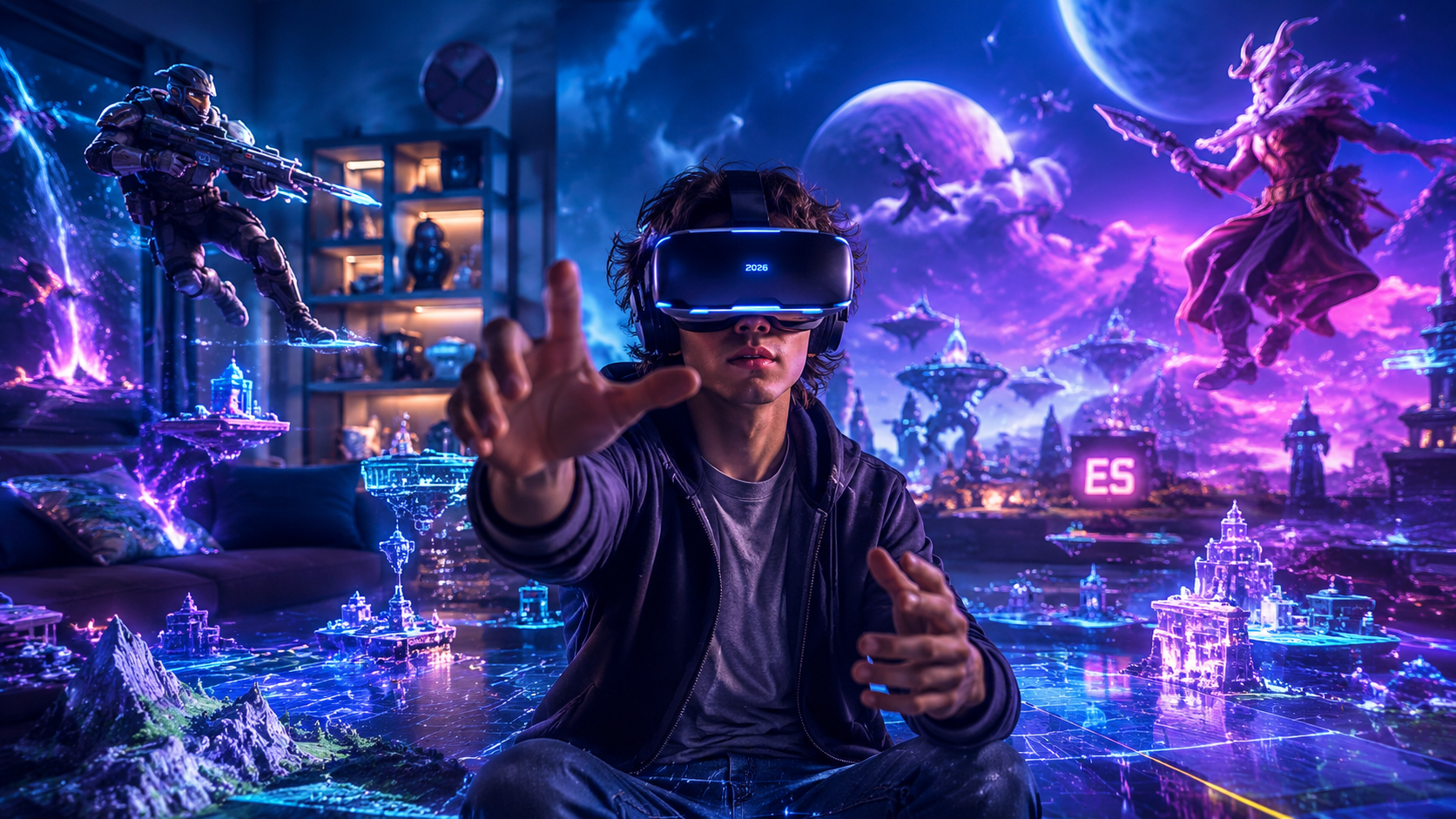
The Next Era of Interactive Entertainment: Intelligent Virtual Worlds
Video games in 2026 have surpassed scripted dialogues and pre-baked environments. Modern game engines integrate real-time generative dialogue models, autonomous Non-Player Character (NPC) behavior trees, procedural neural level synthesis, and hardware-accelerated neural rendering (such as DLSS 4.0 and neural radiance caching) to create living, reactive virtual universes.
This technical guide examines the modern AI gaming stack, generative character architectures, and game development pipelines in Unreal Engine 5 and Unity.
Key AI Technologies in Modern Game Development
| Gaming AI Domain | Underlying Technology | Player Experience Impact | Leading Toolsets |
|---|---|---|---|
| Dynamic Generative NPCs | On-Device SLMs, Audio-to-Facial Rigging | NPCs remember past player actions, converse with contextual unscripted voice, and react emotionally to world events. | NVIDIA ACE, Inworld AI, Convai |
| Real-Time Neural Rendering | Deep Learning Super Sampling & Frame Generation | Upscales 1080p internal buffers to photorealistic 4K 120fps with ray-traced reflections in real time. | NVIDIA DLSS, AMD FSR AI, Intel XeSS |
| Procedural 3D World Generation | Diffusion 3D Mesh & Texture Synthesizers | Generates photorealistic 3D game assets, collision meshes, and PBR textures from simple text descriptions. | Meshy 3D, CSM, Luma Genie, Promethean AI |
| Adaptive Game Difficulty (DDA) | Reinforcement Learning & Player Telemetry | Dynamically adjusts enemy AI tactics and resource drops to maintain optimal player flow state without frustration. | EA SEED, Unity ML-Agents |
Frequently Asked Questions (FAQs)
Do generative NPCs cause latency during fast-paced gameplay?
Modern game engines run quantized 3B parameter models locally on GPU Tensor cores, delivering voice responses in sub-200ms without relying on cloud servers.
How do game developers prevent NPCs from breaking character lore?
Developers configure strict character personas, world lore guardrails, and knowledge vector databases (RAG) that prevent the NPC from discussing topics outside the game’s fictional timeline.