
Best AI in Marketing 2026: Amazing Strategies to Grow Your Brand

Best AI in Marketing 2026: Smarter Strategies to Grow Your Brand

As someone who follows the business world closely, I’ve seen marketing shift significantly over the past few years. By mid-2026, if you’re still running campaigns entirely on intuition and manual ad tweaking, you’re leaving real efficiency on the table. I’ve been testing several AI marketing and personalization tools for local projects in Surat recently, and this guide on AI in marketing 2026 covers what’s genuinely useful, with honest context about what still requires human judgment to work well.

AI in Marketing 2026: Predictive Customer Behavior Analysis

One of the more powerful applications of AI in marketing 2026 is predictive analytics applied to customer behavior. AI tools can analyze patterns across large volumes of customer interaction data to help businesses understand which customers are most likely to convert, which products to surface to which segments, and when to reach out with relevant offers.

It’s worth being accurate about what “predict exactly what a customer wants before they search for it” actually means in practice: these are probabilistic signals based on historical patterns, not certainties. The genuine business value is in prioritizing marketing spend and effort toward higher-probability conversions rather than spreading budget equally, which is a real improvement over less data-driven approaches.

Autonomous Ad Campaigns and Budget Management

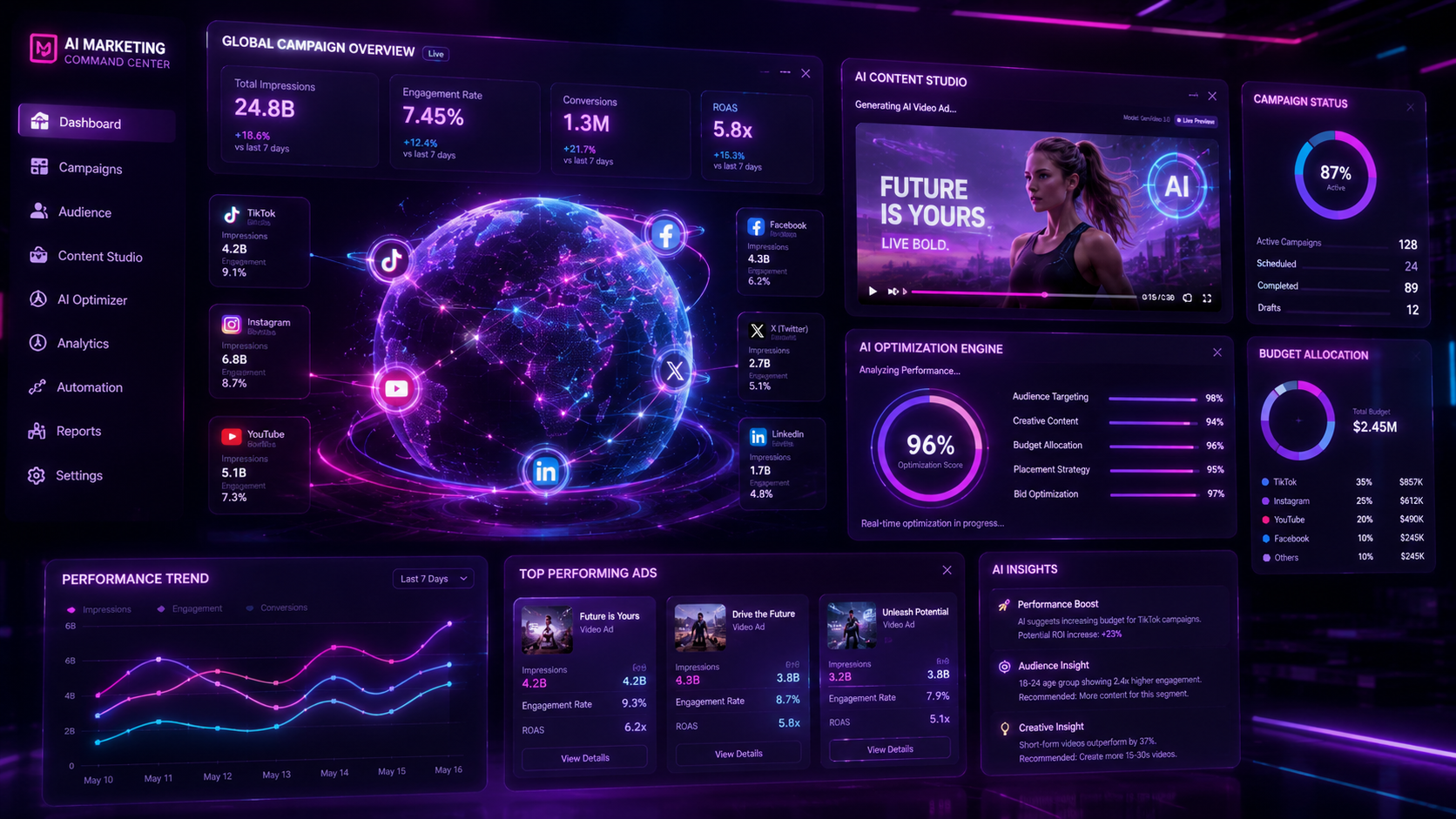
Manual ad management has genuinely shifted. Platforms like Google Ads and Meta now use AI heavily for automated bidding, audience targeting, and creative testing, which means that for most businesses, the question isn’t whether AI is involved in their ad campaigns but how well they’re directing it. Best AI Agents tools that create multiple ad variations and automatically shift budget toward better performers have made campaign management more efficient, particularly for businesses without dedicated paid media teams.

The specific ROI multiplier claims you’ll see in marketing materials for these tools vary enormously by industry, audience, and campaign quality, so it’s worth testing with your own data rather than assuming any particular published figure applies to your situation.

AI-Generated Content and Video Marketing

Content creation has become significantly faster with AI assistance. Brands are using AI video generation tools to create first-draft video ad content from text prompts, and AI image generation tools to produce product imagery and social assets considerably faster than traditional production. This has meaningfully reduced the cost of producing content variety, which matters for testing different creative approaches.

The honest caveat is that AI-generated content for marketing still works best as a starting point that human marketers refine and quality-check rather than publishing directly. Brand voice, cultural nuance, and the kind of instinct that comes from knowing your specific audience still benefit significantly from human judgment at the review stage.

Voice and Visual Search Optimization

As we discuss in our Personal AI Hardware guide, people are increasingly using voice and camera-based interfaces rather than just typing. Visual search technology that lets users find products by photographing something similar has grown in adoption, particularly for fashion, home goods, and similar product categories.

For marketers, this shift means that AI in marketing 2026 requires thinking beyond keyword optimization toward ensuring your content and products are structured and described in ways that AI reasoning engines can accurately represent in voice and visual search results. Being genuinely accurate and helpful in your product descriptions and content is increasingly the most reliable SEO strategy.

Ethical Marketing and Data Privacy

Trust has become a real competitive advantage in 2026. As we discuss in our AI ethics guide, customers are more aware of how their data is used for personalization, and brands that are transparent about AI’s role in their marketing tend to build stronger long-term relationships. Privacy-first data collection practices, being clear about what data you collect and why, are both the ethical approach and increasingly the legally required one in most markets.

AI-Driven Influencer Marketing

Influencer marketing has evolved with AI tools that help brands analyze audience authenticity, predict campaign performance based on historical data, and identify better-fit creator partnerships rather than relying solely on follower count. Virtual AI personas as brand ambassadors are a real development, though transparency about their AI nature is increasingly expected by audiences and required by advertising standards bodies in many countries.

AI for Small Business Marketing in India

For small and medium businesses in India, the most practically accessible AI in marketing 2026 tools are content generation assistants for social media and product descriptions, AI-enhanced ad management on established platforms, and analytics tools that help identify which marketing channels are actually driving results for your specific business. Starting with one area where you’re currently spending the most manual time tends to produce better outcomes than trying to adopt many tools at once.

Measuring What Actually Works

One of the most important principles in AI in marketing 2026 is maintaining clear measurement of what your AI-assisted campaigns are actually achieving versus what you were doing before. AI tools can make campaigns more efficient, but they can also optimize toward the wrong metrics if you haven’t clearly defined what success looks like for your business. Regular human review of what the AI is optimizing for, and whether those optimizations align with your actual business goals, is an essential part of running these tools well.

Conclusion

AI in marketing 2026 is delivering real improvements in campaign efficiency, content production speed, and customer behavior analysis for businesses of all sizes. The tools work best when human marketers maintain clear direction over strategy and brand voice while letting AI handle the high-volume, pattern-matching work that doesn’t need human judgment for every decision. At aitutorial.in, we’re committed to helping you apply these tools practically. Check our ChatGPT advanced features guide for AI writing tools that can help with marketing copy.

Leave a Comment