
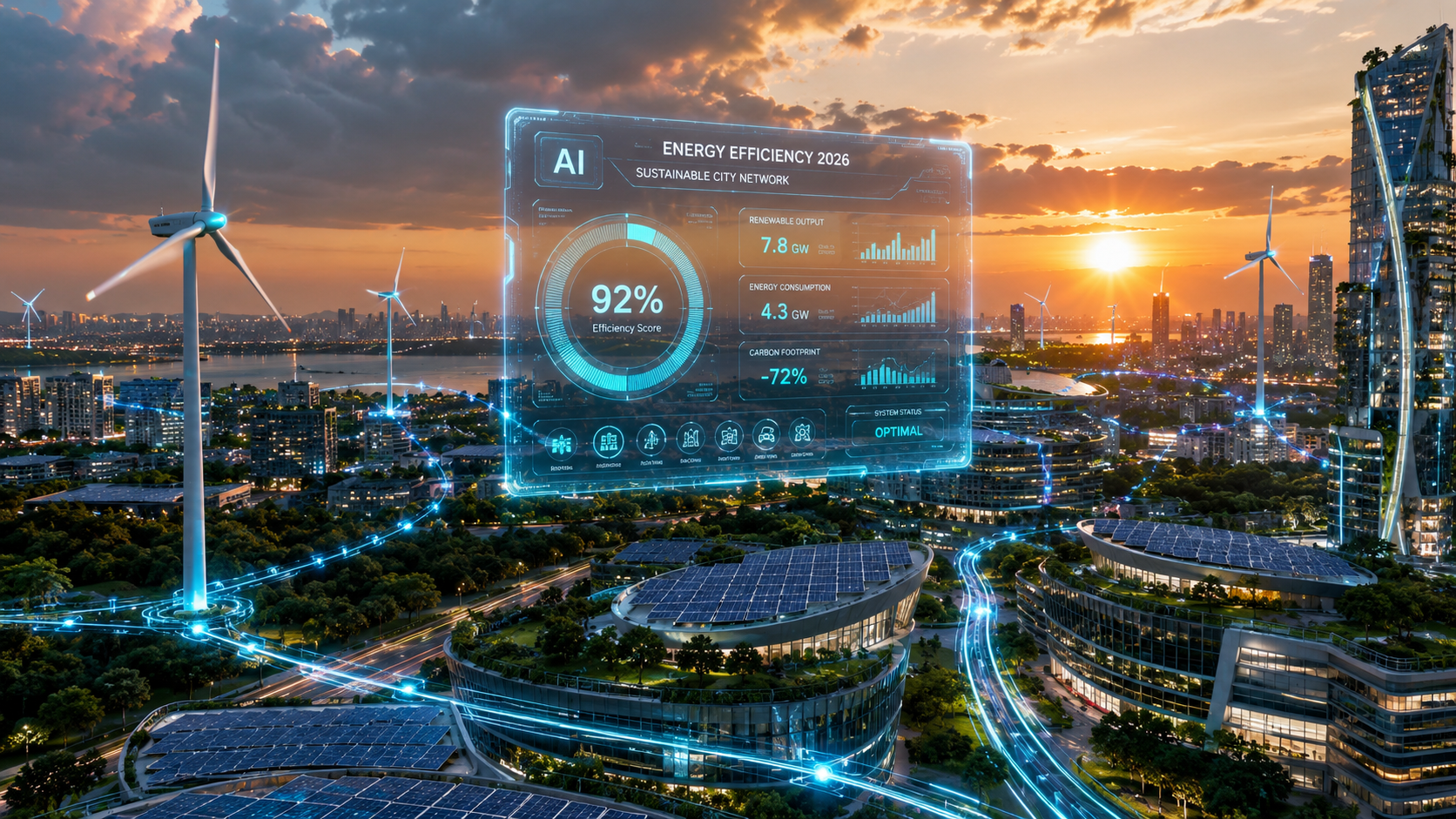
Best AI in Energy 2026: Amazing Solutions for a Greener Future

Best AI in Energy 2026: Real Solutions for a Greener Future

With the heat rising every summer here in Surat, I have become genuinely interested in how AI is being used to manage energy more efficiently. AI in Energy 2026 has moved well beyond pilot projects. It is now actively used for grid stability, renewable energy forecasting, and storage management. I have spent the last few weeks reading through utility reports and case studies on smart grids and battery systems, and this guide is my attempt to explain what is actually working, not just what sounds impressive in a press release.

AI in Energy 2026: Smart Grids and Load Balancing

One of the clearest use cases for AI in Energy 2026 is what utilities call “autonomous load balancing.” Power networks now use AI models to forecast electricity demand by analyzing weather patterns, historical consumption, and real-time usage data. When demand is predicted to spike, these systems can automatically redistribute load across the grid to reduce the risk of blackouts.

This is not theoretical. Utilities in several countries have published case studies on AI-assisted grid management reducing outage frequency. For a closer look at how multi-agent coordination works in these systems, see our guide on AI agent orchestration, which covers the same coordination principles used in grid management.

How AI in Energy 2026 Improves Renewable Energy Forecasting

Renewable energy output is naturally unpredictable, since solar generation depends on cloud cover and wind generation depends on weather systems. AI in Energy 2026 has meaningfully improved forecasting accuracy by combining satellite imagery, weather models, and historical generation data. Better forecasts let grid operators plan when to draw on battery storage versus when renewable supply alone can meet demand.

It’s worth being honest about the limits here too: forecasting models are good, but not perfect, and sudden weather changes can still create supply gaps that require backup power sources. The U.S. Department of Energy has published useful background on how forecasting improvements are changing renewable integration, which is worth a read if you want the technical detail beyond what I can cover here.

AI’s Role in Nuclear Fusion Research

One of the more interesting applications of AI in Energy 2026 is in fusion research. Controlling superheated plasma inside a fusion reactor requires extremely fast, precise adjustments, something AI control systems are well suited for, since they can respond faster than traditional control loops. Several fusion research labs have reported improved plasma stability using AI-assisted control systems in recent experiments.

It’s important to be realistic about timelines here: commercial fusion power is still considered years away by most researchers, even with these control improvements. AI is helping researchers iterate faster on reactor designs, but it has not yet solved fusion as a commercially viable energy source.

AI in Energy 2026: Carbon Capture and Climate Monitoring

Carbon capture technology has historically been criticized for being energy-intensive itself, which undercuts its climate benefit. AI in Energy 2026 is being used to optimize Direct Air Capture (DAC) plants by identifying more efficient chemical processes and operating conditions, which helps address that exact criticism. The IEA’s own resources on direct air capture are a good starting point if you want primary data on where this technology currently stands and what its real-world limitations are.

We’ve written more on the broader ethical questions around AI’s role in environmental and climate work in our AI ethics guide, since not every application of AI to energy is automatically a net positive. The energy cost of running AI models themselves is part of that conversation too.

AI-Powered Energy Storage and Grid Resilience

Storage has always been one of the biggest bottlenecks for renewable energy. AI in Energy 2026 is being applied to battery management systems that monitor the state of large battery arrays and predict optimal charge and discharge cycles. This helps ensure that solar energy generated during the day is available when demand peaks in the evening, rather than going to waste.

This kind of grid resilience work matters most in regions transitioning away from fossil fuels, where storage gaps can otherwise undermine the case for renewable adoption.

Virtual Power Plants and Decentralized Energy Markets

A growing trend worth watching is the rise of Virtual Power Plants (VPPs), where AI in Energy 2026 coordinates distributed home solar and battery systems as a combined resource. Homeowners with solar panels can sell excess energy back to the grid, with AI systems handling demand forecasting and price-setting in near real time. This is still an emerging market. Adoption varies significantly by region and local regulation, but it represents a meaningful shift toward more decentralized energy participation.

What This Means for Everyday Consumers

Most of these AI-driven changes happen behind the scenes, but they do show up in everyday ways: slightly more stable power during heatwaves, utility apps that now show real-time pricing based on grid demand, and in some regions, the option to enroll your home solar and battery system into a VPP program for extra income. If you’re a homeowner with solar panels, it’s worth checking whether your local utility already offers any AI-managed demand-response or VPP program, since adoption is growing but still inconsistent depending on where you live. For businesses, the more practical near-term opportunity is usually in AI-assisted energy monitoring and load forecasting rather than anything involving fusion or large-scale carbon capture, which are still mostly research and pilot-stage technologies. Small and mid-sized businesses with high power usage, like manufacturing units or cold storage facilities, are often better served by simpler AI-based monitoring tools that flag unusual consumption patterns and suggest cost-saving adjustments, rather than waiting for larger grid-level innovations to trickle down.

Conclusion

AI in Energy 2026 is genuinely changing how grids are managed, how renewable energy is forecast, and how storage systems are optimized, but it’s not a silver bullet, and several of these technologies (fusion, large-scale carbon capture) are still maturing rather than fully solved. At aitutorial.in, we’ll keep tracking which of these tools deliver real results versus which stay in the pilot-project stage. You can also check our list of Best AI Agents 2026 to see some of the underlying agent technology driving these energy applications.

Leave a Comment