
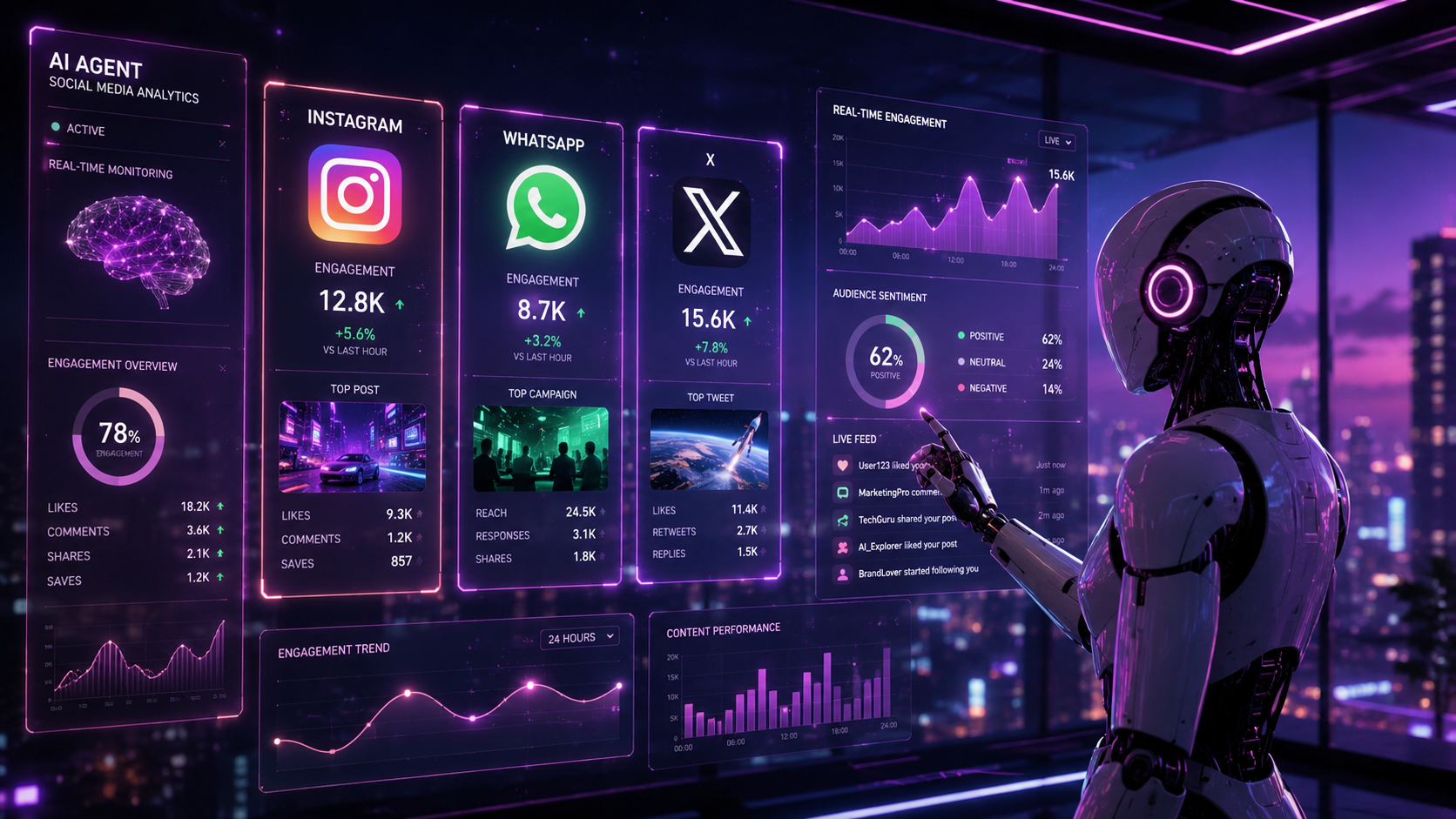
Best AI in Social Media 2026: How Engagement Is Truly Changing
Ever since I started tracking digital trends from my desk here in Surat, I have noticed a massive shift in how my own social media feeds behave. Scrolling through Instagram or X (Twitter) in mid-2026 feels different compared to just two years ago. I have spent the last few weeks personally testing autonomous engagement and AI scheduling tools on a few client accounts, and the results have genuinely surprised me both the wins and a few limitations worth knowing about. In this guide, I want to skip the buzzwords and walk through exactly how AI in social media 2026 is changing things for creators, marketers, and small business owners based on hands-on testing, not just headlines.
AI in Social Media 2026: Autonomous Content Creation and Scheduling
One of the biggest shifts driving AI in social media 2026 is how much of the content pipeline can now run on autopilot. AI scheduling tools can analyze what is trending in a niche, suggest post timing based on when your specific audience is active (not just generic “best time to post” charts), and even generate first-draft captions or short video edits.
In my own testing, I used an AI scheduler for a local Surat-based food brand’s Instagram account. The tool’s audience-activity prediction was reasonably accurate engagement on AI-suggested time slots was noticeably higher than our old manual schedule but the auto-generated captions still needed manual editing about 70% of the time to sound natural and avoid generic phrasing. That is worth knowing if you are evaluating these tools: they save time on the mechanical parts of the job, not the creative judgment part.
If you want a deeper breakdown of which tools are actually worth paying for, I cover comparisons in our guide on AI video generation tools and how they fit into a broader content workflow in our AI marketing tools overview.
For background on how scheduling algorithms have evolved, Hootsuite’s own research on AI in social media marketing is a useful external reference if you want to dig into the data behind these trends.
How AI in Social Media 2026 Powers Hyper-Personalized Feed Curation
Feeds today are shaped less by simple “likes and follows” signals and more by behavioral patterns how long you pause on a post, whether you re-watch a video, and what you skip without engaging. Platforms like Instagram and TikTok have both published updates on how their ranking systems weigh these signals more heavily than before.
What this means practically for creators: posting consistently is no longer enough on its own. Content that holds attention in the first 2-3 seconds tends to get pushed further, because that early retention signal feeds directly into the personalization engine. I have seen this firsthand two nearly identical reels for the same client, where only the hook in the first three seconds was different, had a noticeably different reach.
If you are building a content strategy around this, it is worth reading Meta’s own transparency notes on how Instagram’s algorithm works rather than relying on guesswork.
Virtual Influencers: A Big Trend in AI in Social Media 2026
Virtual or AI-generated influencer accounts have grown significantly this year, and a few have built real audiences. The more credible ones tend to disclose clearly that they are AI-generated or AI-assisted, which matters both for audience trust and for compliance the Federal Trade Commission and India’s Advertising Standards Council have both signaled increased scrutiny of undisclosed AI-generated endorsements.
If you are considering using a virtual persona for your own brand, transparency is not optional from a trust standpoint. We go into the disclosure and ethics side of this in more detail in our AI ethics guide.
Community Management: Another Key Use of AI in Social Media 2026
Comment moderation and first-response handling have become genuinely useful AI applications this year. Tools that filter spam, flag harmful comments, and answer common repeat questions (shipping times, pricing, store hours) free up real time for creators and small teams to focus on meaningful replies instead.
In practice, I would not recommend fully automating replies on a brand account without human review of the responses for at least the first few weeks auto-generated replies can occasionally misread sarcasm or sensitive comments, and a bad automated reply is worse than a delayed human one. For a closer look at where automation works well versus where it does not, see our AI customer support guide.
AI and Decentralized Social Platforms
A smaller but growing trend is the rise of decentralized social platforms (often built on Web3-style infrastructure) where users have more control over their own data and how it’s used for recommendations. These platforms are still a fraction of the size of mainstream networks, and adoption has been gradual rather than explosive it is a trend worth watching rather than something most creators need to act on immediately.
Privacy, Deepfakes, and Synthetic Media
Synthetic media AI-generated faces, voices, and video has become harder to distinguish from real content this year, and that has real consequences for trust on social platforms. Several platforms have begun rolling out content labeling for AI-generated media, and tools for detecting deepfakes are an active area of development, though none are fully reliable yet.
If your brand uses any AI-generated visuals or voiceovers in social content, labeling them transparently is both good practice and increasingly expected by audiences and platforms alike.
Practical Takeaways
If you are managing social media for a brand or as a creator right now, here is what I would actually prioritize with AI in social media 2026 based on hands-on testing rather than theory:
- Use AI scheduling tools for timing and first-draft ideas, not final captions always edit for natural tone.
- Pay attention to your first 2-3 second hook on video content, since retention signals matter more than ever to feed ranking.
- If you use any AI-generated voice, face, or persona, disclose it clearly.
- Keep a human reviewing AI-generated replies before they go live, at least initially.
Conclusion
AI in social media 2026 has made management faster, but the platforms have also gotten better at rewarding genuinely engaging content over generic automated posting. The tools are most useful as an assistant for the repetitive parts of the job scheduling, first drafts, basic moderation while the creative judgment still benefits from a human hand. At aitutorial.in, we will keep testing these tools hands-on and sharing what actually works, not just what’s marketed. You can also check our guide on AI agent orchestration if you are managing multiple social bots and want to keep them organized.