
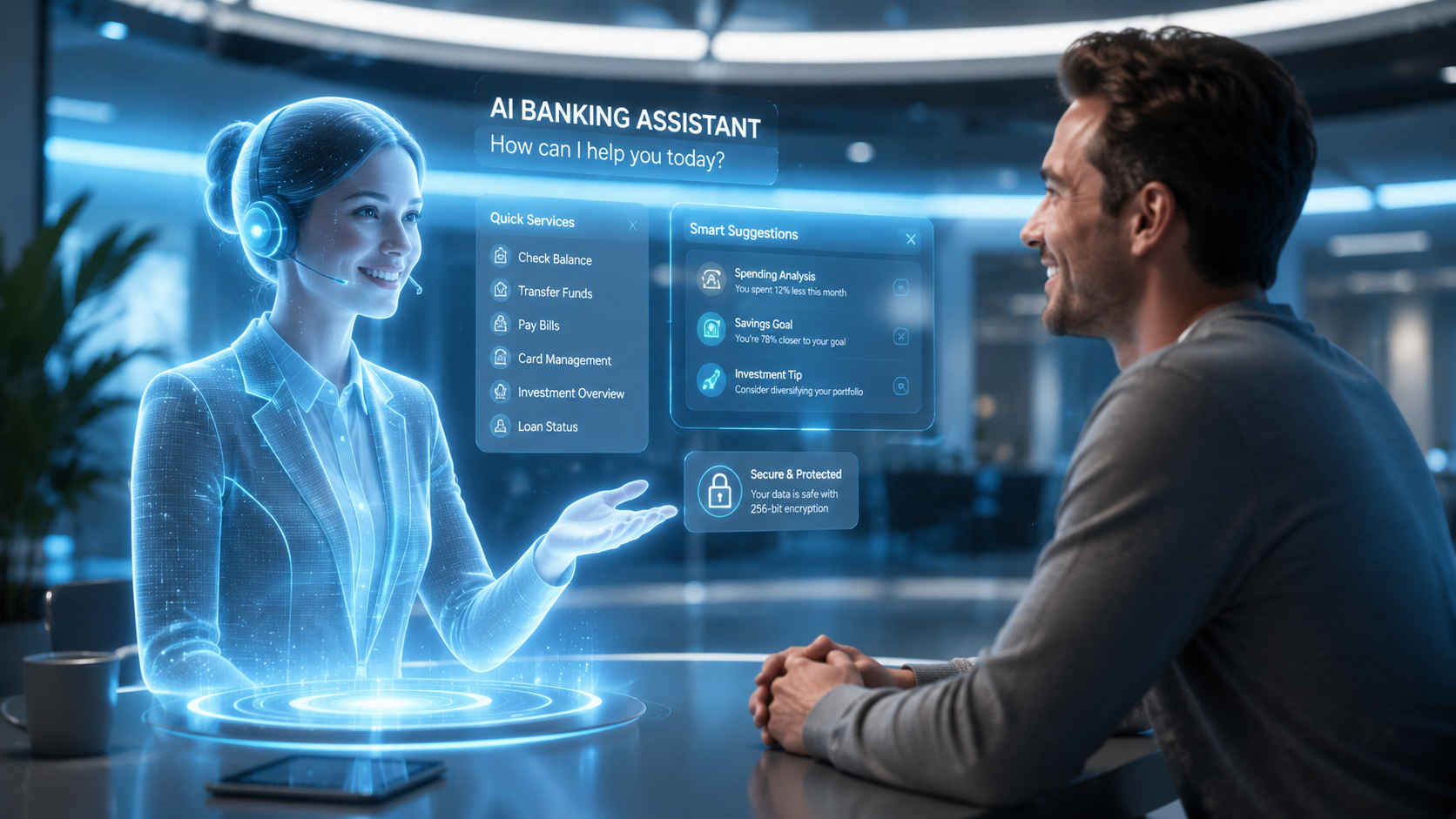
Best AI in Customer Support 2026: How Customer Experience Is Changing
We’ve all experienced it: sitting on hold, listening to repetitive music, waiting for a customer service agent who may or may not be able to actually solve your problem. By mid-2026, that experience has genuinely improved in a number of industries, even if the most seamless AI support experiences are still more common at larger, better-resourced companies than across the board. I’ve been testing several AI customer support tools and frameworks recently, and this guide on AI in customer support 2026 covers what’s actually working, with honest context about where limitations remain.
AI in Customer Support 2026: From Scripted Bots to Contextual Agents
The most significant practical shift in AI in customer support 2026 is the move from scripted, menu-driven bots toward agents that can handle more open-ended conversations. Rather than just directing customers to a FAQ page, better-built AI agents can now understand what a customer is actually asking, even when it’s phrased in different ways, and provide a relevant, specific response rather than a generic one.
Claims about AI “sensing emotion” through voice tone are an active area of development, though the real-world accuracy of these systems still varies considerably by tool and context. What’s more reliably true is that modern AI agents are better at recognizing frustration signals in text (like all-caps, specific complaint language, or escalating requests) and adjusting their response tone and escalation behavior accordingly.
Autonomous Problem Resolution
One of the more practically useful developments in AI in customer support 2026 is the ability to complete actual tasks rather than just answering questions. AI agents integrated with backend systems can now handle clear, well-defined tasks autonomously: processing a return, rescheduling a delivery, or resetting an account password, without requiring a human handoff for every interaction.
As we discuss in our Best AI Agents guide, this kind of task-completion capability works well for straightforward, rules-based processes. For more complex or edge-case situations, well-designed support systems still route to a human agent rather than having the AI attempt something outside its reliable scope. The businesses getting the best results tend to be the ones that have clearly defined which tasks AI handles autonomously versus which ones get escalated, rather than trying to automate everything.
Multilingual Support and Regional Language Access
For businesses serving customers across India’s diverse linguistic landscape, multilingual AI support has become a genuine operational advantage. AI in customer support 2026 tools can handle conversations across Hindi, Gujarati, Tamil, and other major Indian languages with meaningfully better accuracy than just a couple of years ago, which allows smaller businesses to offer quality support in regional languages without maintaining large multilingual teams.
Accuracy in specialized or technical vocabulary still varies across languages, and it’s worth testing performance in your specific language and domain rather than assuming general multilingual capability translates perfectly to your use case.
Proactive Support and Early Issue Detection
One of the more interesting developments in AI in customer support 2026 is the shift toward proactive outreach. AI systems that monitor operational data, like shipping status, service uptime, or account activity, can now trigger automated notifications to customers when a potential issue is detected, before the customer has to contact support themselves.
When implemented well, this genuinely improves customer trust. Getting an automatic message that says “we noticed your delivery may be delayed and we’re looking into it” feels much better than discovering the delay yourself and having to chase down an explanation. The effectiveness depends significantly on how well-integrated the support AI is with the company’s operational data, which varies considerably between businesses.
Omnichannel Context Continuity
Customers expect to be able to switch between support channels, from WhatsApp to email to live chat, without having to re-explain their situation from scratch every time. AI in customer support 2026 has improved significantly at maintaining context across channels, so a customer who started a conversation on WhatsApp can continue it via email without the agent losing track of what’s already been discussed.
This is one of the features where the gap between well-resourced enterprise deployments and smaller business implementations tends to be most visible, since it requires tight integration between multiple communication platforms.
Ethics, Transparency, and Data Privacy
As discussed in our AI ethics guide, transparent disclosure when customers are interacting with an AI rather than a human is both an ethical obligation and, in many jurisdictions, increasingly a legal one. Businesses using AI in customer support 2026 should ensure customers can always clearly identify whether they’re talking to an AI, and that there’s a clear, easy path to reach a human agent when needed.
Customer data privacy is also a significant responsibility. India’s Digital Personal Data Protection Act sets out specific obligations for how businesses must handle customer data, which extends to data processed by AI support systems. Understanding those obligations before deploying AI in customer-facing roles is essential.
What This Means for Businesses in India
For small and mid-sized businesses in India looking to improve customer support with AI tools, the most practical starting points are WhatsApp-based AI agents (given WhatsApp’s dominance in Indian business communication), automated order and delivery status responses, and FAQ-handling bots for common queries. For more complex orchestration of multiple support channels, check our AI agent orchestration guide for practical frameworks.
Conclusion
AI in customer support 2026 is genuinely delivering better customer experiences in a growing number of businesses, particularly for well-defined, repeatable support tasks. The gap between a mediocre implementation and a genuinely good one tends to come down to how clearly the business has defined which tasks AI handles autonomously versus which ones escalate to humans, and how well the AI is integrated with the backend systems it needs to actually resolve issues. At aitutorial.in, we’ll keep covering practical implementation guides for these tools as they evolve.