Beyond Prompt Engineering: The Era of Agentic Systems
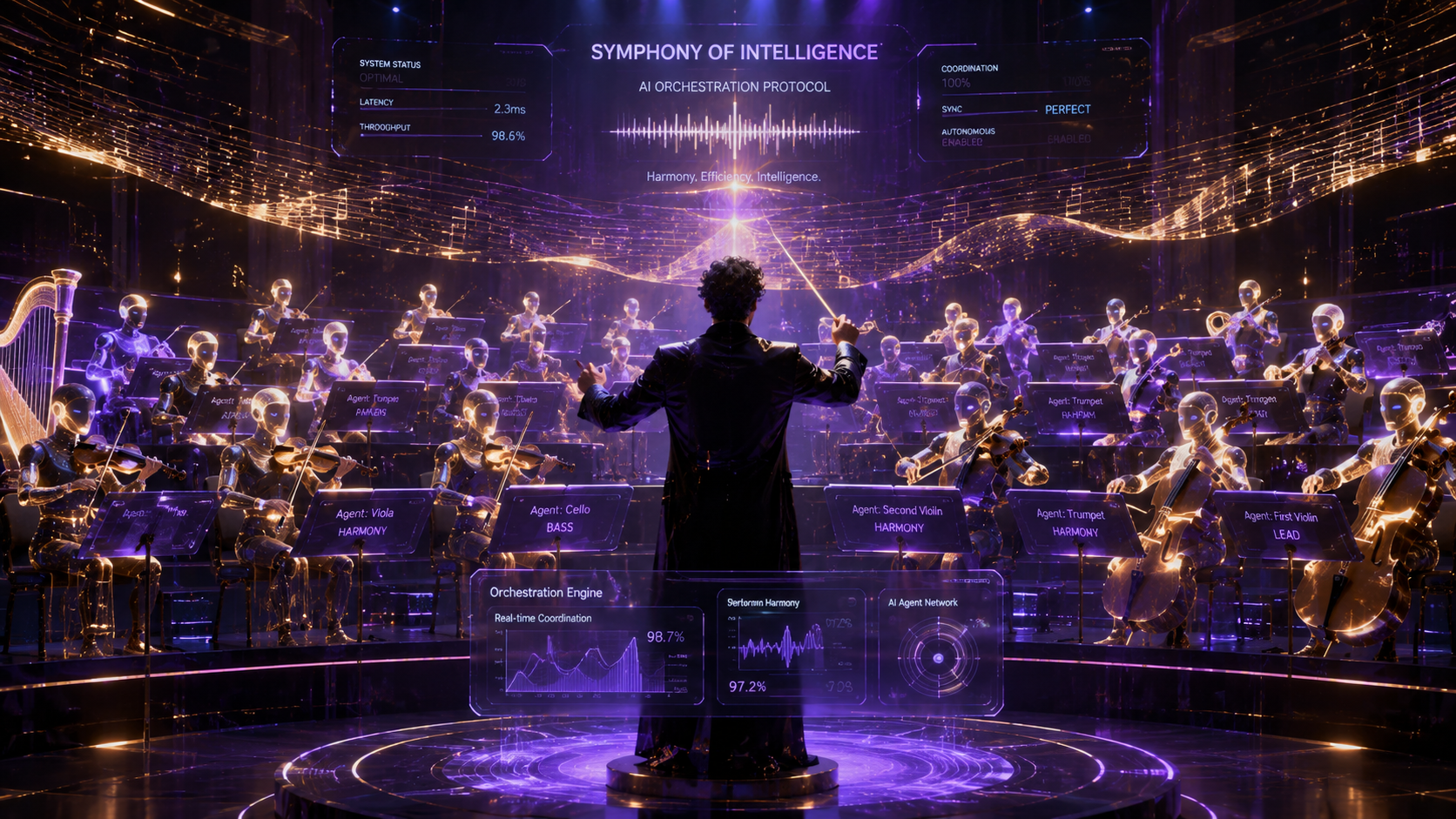
Single-turn prompt engineering is no longer sufficient for complex, enterprise-grade AI software. When building systems capable of executing multi-step workflows—such as automated software debugging, market analysis, or legal discovery—developers rely on AI Agent Orchestration.
Orchestration frameworks manage state persistence, tool calling, multi-agent coordination, and error recovery to build deterministic, reliable autonomous systems.
Leading Orchestration Frameworks Compared
| Framework | Architecture Paradigm | Strengths | Best Use Case |
|---|---|---|---|
| LangGraph | Stateful Cyclic Graphs | Granular control over agent loops, built-in persistence, human-in-the-loop checkpoints. | Production enterprise agents requiring deterministic execution paths. |
| CrewAI | Role-Based Multi-Agent | Intuitive role delegation, rapid prototyping, clean task assignment abstraction. | Collaborative multi-role teams (e.g. Researcher + Writer + Editor). |
| Microsoft AutoGen | Conversational Multi-Agent | Asynchronous message passing, rich code execution environments. | Complex mathematical modeling and automated programming tasks. |
| LlamaIndex Workflows | Event-Driven RAG Agents | Deep integration with vector indexes, document chunking, and retrieval pipelines. | Knowledge-intensive document question answering and synthesis. |
Core Design Patterns in Agent Orchestration
Modern agent architectures utilize established computational design patterns:
- Router Pattern: An initial classifier LLM inspects the user query and routes it to specialized downstream agents or tools (e.g., Code Agent vs. Billing Agent).
- Evaluator-Optimizer Loop: One agent generates a candidate solution while a secondary critic agent evaluates the result against test cases and loops until quality criteria are met.
- Hierarchical Orchestrator: A supervisor agent dynamically breaks a complex problem into sub-tasks and delegates them to specialized worker agents, aggregating the final outputs.
Building a Stateful Agent with LangGraph (Python Example)
from typing import TypedDict, Annotated, Sequence
import operator
from langgraph.graph import StateGraph, END

# Define Agent State
class AgentState(TypedDict):
    messages: Annotated[Sequence[str], operator.add]
    attempts: int

# Define Nodes
def query_planner(state: AgentState):
    print("Generating execution plan...")
    return {"messages": ["Plan created"], "attempts": state.get("attempts", 0) + 1}

def executor_node(state: AgentState):
    print("Executing plan...")
    return {"messages": ["Task executed successfully"]}

# Build Workflow Graph
workflow = StateGraph(AgentState)
workflow.add_node("planner", query_planner)
workflow.add_node("executor", executor_node)

workflow.set_entry_point("planner")
workflow.add_edge("planner", "executor")
workflow.add_edge("executor", END)

app = workflow.compile()
output = app.invoke({"messages": ["Start task"], "attempts": 0})
print("Final State:", output)
Frequently Asked Questions (FAQs)
Why use cyclic graphs instead of sequential DAGs?
Real-world tasks require trial, error, and reflection. Cyclic graphs allow an agent to retry a failed operation, adjust parameters, and self-correct before terminating.
How do you prevent infinite execution loops in autonomous agents?
Always enforce hard step limits (recursion limits), timeout thresholds, and cost guardrails on every graph execution.