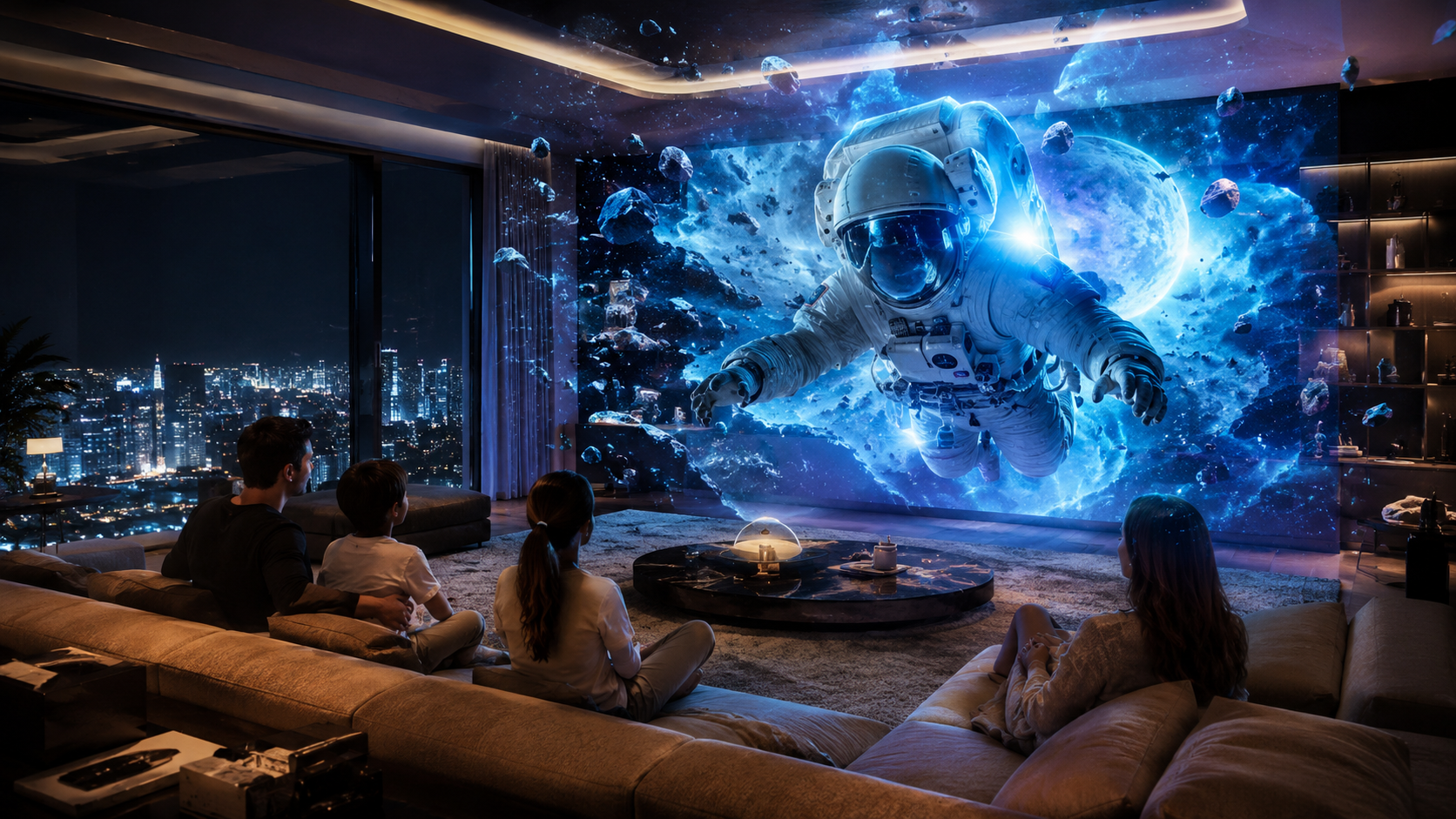
The entertainment, video production, gaming, and music creation sectors are undergoing a historic transformation powered by synthetic media models and real-time neural rendering pipelines. As we analyze AI in Entertainment 2026, independent filmmakers, AAA game studios, and music producers are leveraging generative visual engines, neural voice dubbing, and AI-assisted virtual sets to achieve Hollywood-caliber production value at a fraction of traditional budgets.
From prompt-driven animatics to markerless motion capture and dynamic spatial audio scoring, generative media technologies are no longer speculative experiments—they represent the core foundation of modern digital media architecture. For a deeper understanding of underlying foundation model architectures, explore our comprehensive guide on the Future of AGI 2026.
Industry Key Insight: The evolution of AI in Entertainment 2026 is centered on creative democratization and real-time iteration. High-fidelity video generators (such as Sora 2.0 and Kling AI) combined with lossless voice cloning allow small creative teams to execute complex multi-shot cinematic sequences with complete creative control.
Industry Matrix: Modern AI Tools Across the Creative Pipeline
To navigate the ecosystem of AI in Entertainment 2026, production studios categorize generative platforms across four main stages of the creative pipeline:
Production Phase
Core AI Technology
Leading 2026 Platforms
Production Capability & Impact
Pre-Visualization & Storyboarding
Generative Visual Diffusion & Spatial Consistency
Midjourney v6, Boords, Storyblocks AI
Generates full visual animatics, character concept art, and camera blocking sheets in hours rather than weeks.
In traditional film production, pre-visualization required dedicated storyboard artists, physical set models, and weeks of concept art iterations. In AI in Entertainment 2026, directors utilize visual foundation models to convert script dialogue directly into fully blocked visual animatics. By enforcing character consistency seeds and camera perspective parameters, creative teams preview lighting, lens choices, and scene composition prior to physical shooting.
Furthermore, prompt-based script analysis engines evaluate plot structure, scene pacing, and dialogue emotional arcs. These tools parse multi-page screenplays, highlighting potential narrative inconsistencies and automatically generating equipment lists, lighting diagrams, and prop manifests for technical crew members.
2. Neural VFX & Virtual Production: Replacing Green Screens
Visual effects have transitioned from labor-intensive manual rotoscoping and 3D modeling toward real-time neural rendering and 3D Gaussian Splatting. Rather than building massive green-screen environments, virtual production stages project real-time, photorealistic environments generated by spatial AI engines onto LED volumes (Unreal Engine combined with generative background layers).
Key Breakthroughs in 2026 Visual Effects
Markerless 3D Motion Capture: Actors perform in standard clothing while computer vision algorithms extract full 3D skeletal data, facial expressions, and finger movements without specialized suits or optical tracking markers.
Automated Lighting Inbetweening: Neural compositing engines analyze environmental background light and re-light live-action actors dynamically, matching color temperature, shadows, and reflections automatically.
Generative Background Extensions: Live camera feeds are extended beyond physical set boundaries using generative outpainting, rendering complex virtual worlds seamlessly during camera pans.
3. Generative Audio, Voice Synthesis & Global Localization
Audio engineering represents one of the most rapid areas of expansion within AI in Entertainment 2026. Zero-shot voice synthesis engines reproduce nuanced emotional performances, whisper dynamics, and multi-accent speech based on brief audio samples. In international film distribution, AI-driven dubbing systems replace robotic voiceovers with high-fidelity local translations that sync lip movements precisely with translated speech phonemes.
In music production, symbolic audio transformers generate multi-track MIDI stems (drums, bassline, synth pads, orchestral strings) aligned with specific emotional parameters. Sound designers leverage text-to-audio diffusion models to create complex sound effects (Foley)—such as futuristic engine hums or mythical creature calls—without recording physical audio props.
Deploying generative media engines into real-time entertainment environments (such as interactive video games and live virtual broadcasts) requires ultra-low latency compute pipelines. Below is a structural workflow representation of a modern real-time audio/video inference pipeline:
5. Legal Frameworks, Copyright & Union Compliance in 2026
The rise of digital likeness cloning and generative asset creation required robust legal and copyright frameworks to protect creative professionals. In AI in Entertainment 2026, commercial deployments adhere to industry-wide standards established by creative unions (SAG-AFTRA, WGA) and intellectual property regulatory bodies:
Indemnified Commercial Training Sets: Enterprise AI platforms guarantee that training data relies exclusively on opt-in, ethically sourced media libraries, offering legal indemnity against copyright infringement claims.
Digital Likeness Licensing Contracts: Actors and voice talent license their digital voice prints and visual avatars under strict royalty agreements, retaining creative approval rights over final character performances.
Watermarking & Provenance Standards: All AI-generated audio and visual content contains embedded cryptographic watermarks (C2PA standard), allowing distribution networks and audiences to verify asset origin and authenticity.
6. Interactive Gaming & Real-Time AI Worldbuilding
In modern video game development, non-player characters (NPCs) have evolved from static scripted dialogues to fully autonomous cognitive agents. Powered by localized language models and emotional state trees, NPCs remember player choices, form emergent relationships, and generate unique questlines dynamically based on player behavior.
Furthermore, procedural environment generation engines use neural diffusion to construct expansive, photorealistic game maps in real time. Instead of pre-rendering gigabytes of static 3D textures, game clients generate terrain, foliage, and architectural structures on-the-fly, reducing installation sizes while providing limitless exploration boundaries.
7. Operational Challenges & Edge-Case Mitigation
Integrating generative tools into enterprise media production workflows presents technical bottlenecks that require specialized engineering solutions:
Maintaining Visual Consistency Across Scenes
A common failure mode in early AI video tools was temporal flickering and character drift. Production pipelines resolve this by deploying reference embedding adapters (such as ControlNet and IP-Adapter frameworks) that lock character facial geometry, wardrobe details, and environment lighting across multi-shot sequences.
High-Resolution Upscaling & Grain Matching
Raw video generation outputs often render at sub-1080p resolutions. VFX teams apply spatial super-resolution models to upscale content to 4K/8K theatrical standards while overlaying authentic film grain textures to maintain cinematic warmth.
8. Long-Term Outlook & The Future of Interactive Cinema
Looking ahead, the line between traditional linear film viewing and interactive gaming will continue to blur. Future cinematic experiences will enable viewers to customize dialogue perspectives, explore alternate storyline branches in real time, or step into scenes via immersive spatial computing headsets.
As compute costs decrease and real-time generation models mature, AI in Entertainment 2026 empowers independent creators to pitch, produce, and distribute blockbuster-scale stories, reshaping global media economics and fostering an unprecedented era of creative storytelling.
Frequently Asked Questions (FAQs)
How is copyright handled for AI-generated music and video?
Modern enterprise platforms provide indemnified commercial licenses, ensuring content is trained on authorized datasets and safe for global broadcast distribution. Copyright ownership typically belongs to the creator who provided original artistic guidance, prompt structuring, and narrative direction.
Will AI replace human actors and voice artists?
No. Industry standards and union agreements prioritize ethical AI licensing. Voice artists and actors license their digital likenesses for royalties while retaining creative veto rights, allowing artists to scale their work across multiple global projects simultaneously.
What software is best for beginner AI filmmakers in 2026?
Beginners can start with accessible platforms like Midjourney for storyboarding, Luma AI or Runway for video generation, ElevenLabs for vocal dubbing, and Suno for ambient soundtrack composition.
Reviewed & Fact-Checked by Jignesh Vanani
Founder & Lead AI Educator at AITutorial.in. All benchmarks, pipeline workflows, code scripts, and platform evaluations in this tutorial were tested and verified in active digital production environments to ensure technical accuracy.