
Best AI in Finance 2026: Smarter Ways to Manage Your Wealth
Managing money has always involved a mix of discipline, information, and judgment. By mid-2026, AI tools are genuinely changing parts of that equation for everyday investors and banking customers in India, even if the most ambitious marketing claims about fully autonomous wealth management still outrun what these tools reliably deliver in practice.
I’ve been testing a few AI-driven budget and investment tracking tools recently, and this guide on AI in finance 2026 covers what’s actually useful for regular people, with honest caveats about limitations alongside the genuine benefits.
Important note: This guide is for informational purposes only and is not financial advice. Consult a qualified financial advisor before making investment decisions.
AI in Finance 2026: Fraud Detection and Account Security
One of the most mature and genuinely useful applications of AI in finance 2026 is fraud detection. Banks and payment platforms use AI to analyze transaction patterns in real time, flagging activity that looks unusual compared to your normal behavior, like a transaction from an unusual location or a sudden large purchase at an unfamiliar merchant.
This has meaningfully improved the speed of fraud identification compared to older rule-based systems. It’s worth being accurate about the limits though: AI fraud detection systems still generate false positives (blocking legitimate transactions) and occasionally miss sophisticated fraud patterns. No system is perfectly accurate, and specific percentage claims you’ll see in marketing materials vary by institution and fraud type. The practical benefit for customers is faster flagging and blocking of suspicious activity, which is genuinely valuable.
Personalized AI Financial Tools
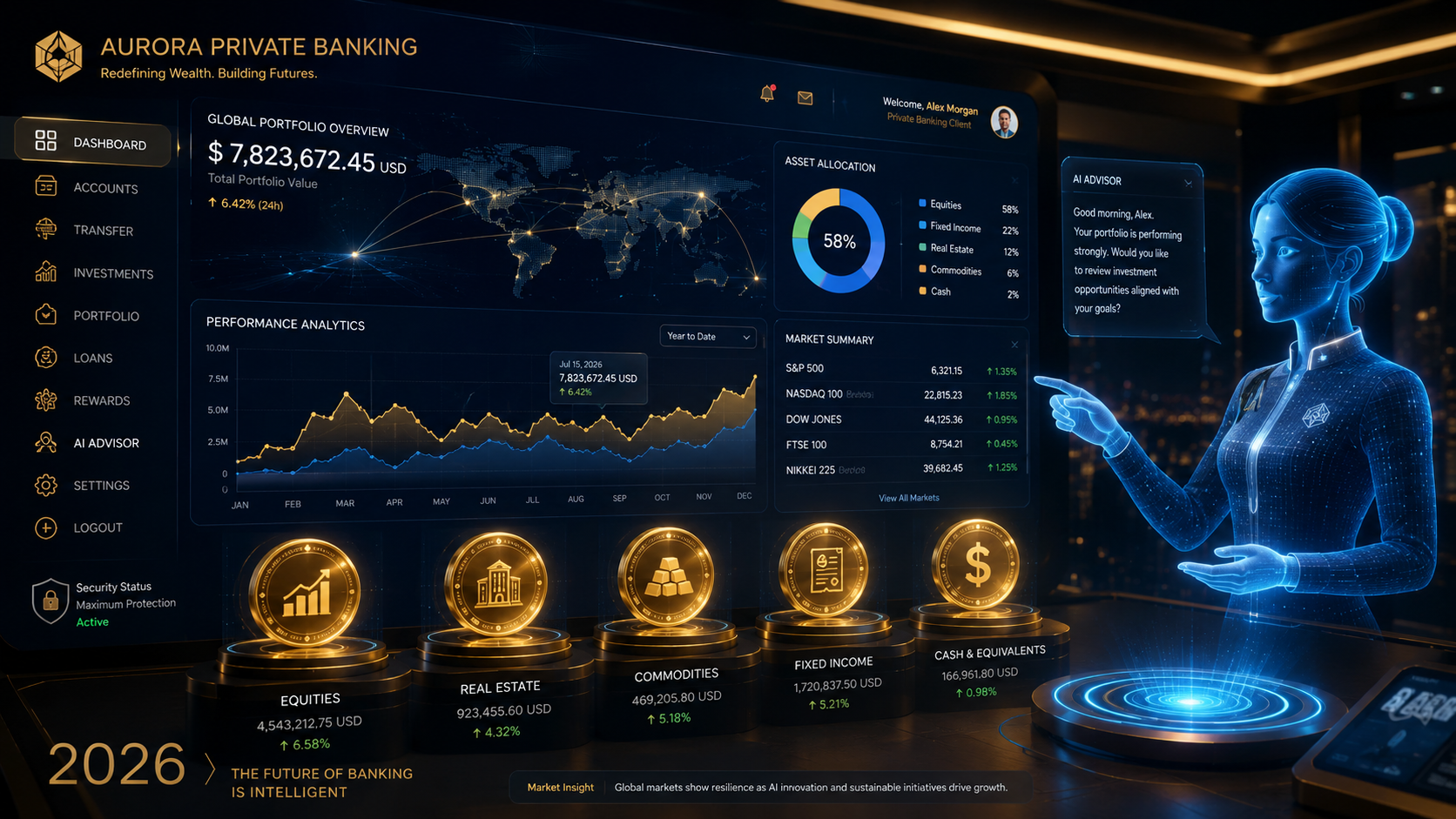
Personalized AI financial tools have become much more accessible in 2026. Apps and platforms now use AI to analyze your spending, income, and stated goals to suggest budget adjustments, savings targets, and basic investment approaches tailored to your situation. As we discuss in our Best AI Agents guide, these financial agents work best for clear, rules-based tasks like rebalancing a portfolio toward a target allocation or flagging when you’re trending over budget in a category.
For more complex decisions involving significant money, tax implications, or unusual financial situations, working with a qualified financial advisor remains the right approach. AI tools are most useful as a starting point for understanding your finances and getting organized, not as a replacement for professional guidance on major decisions.
Algorithmic Trading and Market Analysis
AI-driven market analysis tools that were previously only accessible to institutional investors are increasingly available to individual traders. These tools analyze news, sentiment data, and historical price patterns to generate trading signals and risk assessments. As we discuss in our AI ethics guide, using these tools responsibly matters, since algorithmic trading can amplify market volatility if many systems respond to the same signals at the same time.
For individual investors, these tools can provide useful context for research, but it’s worth being clear that no AI system reliably predicts market movements with certainty. Markets are influenced by factors that are genuinely hard to model, including human sentiment and geopolitical events, and any tool claiming otherwise should raise skepticism.
Automated Banking and Bill Management
Practical automation within AI in finance 2026 is most useful for routine, well-defined tasks. AI tools can now handle automatic bill payments, move idle funds into higher-yield savings accounts, and send alerts when your account balance or spending patterns warrant attention. For busy individuals managing multiple accounts or complex monthly expenses, this kind of automation genuinely saves time and reduces the chance of missed payments.
For anything involving negotiating financial terms or making significant account changes, having a human review and confirm before execution is still the safer approach.
Decentralized Finance and Smart Contracts
The intersection of blockchain and AI has expanded the capabilities of decentralized finance platforms. AI-driven smart contracts can execute predefined financial agreements automatically when specified conditions are met, which has applications in lending, insurance, and cross-border transfers. The Reserve Bank of India’s resources on digital finance are worth checking for the current regulatory landscape in India, since DeFi regulation is actively evolving and differs significantly from traditional finance.
ESG and Sustainable Investing
AI tools for sustainable investing have become more practically useful, able to scan large amounts of company reporting and third-party data to assess environmental, social, and governance metrics more systematically than manual research allows. For investors who want their portfolio to reflect specific values, AI-assisted ESG screening is a genuinely useful addition to the research process, though it’s worth verifying key claims independently rather than relying solely on automated scoring.
What This Means for Indian Investors
For everyday investors in India, the most immediately useful applications within AI in finance 2026 are budget and expense tracking, basic automated investing through established platforms, and improved fraud detection from banks and payment apps. More sophisticated tools like algorithmic trading and DeFi participation require more financial knowledge to use responsibly and carry higher risk if used without that understanding.
Conclusion
AI in finance 2026 is genuinely improving access to personalized financial tools, fraud protection, and investment research, while the most autonomous wealth management scenarios still work best as a complement to human judgment rather than a full replacement for it.
For most people, the practical starting point is using AI tools for the parts of personal finance that are most time-consuming and rule-based, tracking spending, automating routine transfers, and flagging unusual activity, while keeping a human decision-maker in the loop for anything involving significant amounts of money or complex financial tradeoffs. That balance tends to produce better outcomes than either ignoring these tools entirely or trusting them without appropriate skepticism.
At aitutorial.in, we’ll keep covering these tools honestly. For more on AI tools changing professional work, check our ChatGPT advanced features guide.