
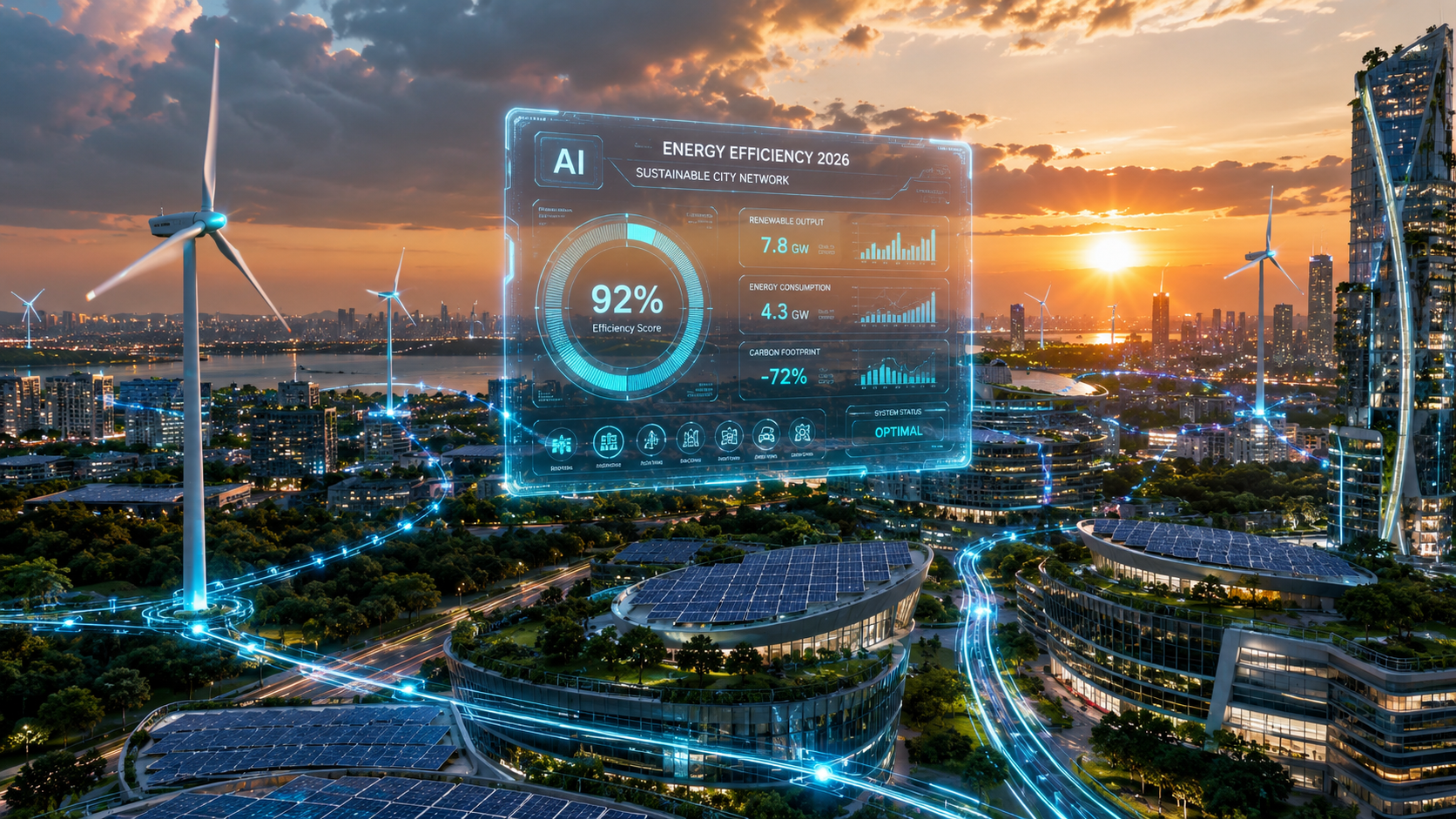
The global transition toward clean zero-carbon energy in 2026 requires unprecedented electrical grid agility. Unlike traditional fossil fuel power plants that generate steady baseline electricity on demand, renewable sources like solar photovoltaics and wind turbines fluctuate continuously with unpredictable meteorological conditions. Integrating AI in renewable energy 2026 infrastructures provides the predictive generation forecasting, battery energy storage optimization, and real-time load balancing needed to stabilize high-renewable electrical networks worldwide.
In this technical clean-tech analysis on AI in renewable energy 2026, we explore how utility operators, independent power producers (IPPs), and smart microgrids deploy deep learning neural networks, computer vision drones, and reinforcement learning algorithms to maximize energy yield, protect grid hardware, and prevent catastrophic power blackouts.
Key Applications of AI Across Clean Tech Domains
Modern electrical utilities leverage specialized artificial intelligence frameworks across four primary clean energy sectors:
| Clean Tech Sector | Core AI Architecture | Primary Operational Benefit | Leading Utility Innovators |
|---|---|---|---|
| Solar & Wind Generation Forecasting | Graph Neural Networks & Satellite Imagery Models | Predicts localized cloud movement and wind velocity 36 hours ahead with 95% accuracy. | Google DeepMind Energy, Open Climate Fix |
| Battery Storage (BESS) Arbitrage | Reinforcement Learning Trading Algorithms | Autonomously charges utility batteries during low-cost surplus and discharges during peak prices. | Tesla Autobidder, Fluence Energy, Habitat Energy |
| Grid Predictive Maintenance | Acoustic Sensors & Computer Vision Drone Audits | Detects insulator micro-cracks and vegetation encroachment on high-voltage transmission towers. | Buzz Solutions, eSmart Systems |
| Virtual Power Plants (VPPs) | Distributed Edge Orchestration | Aggregates thousands of residential solar/battery systems into a unified grid-support power station. | Stem, sonnen, Enphase Energy |
1. AI-Powered Solar & Wind Generation Forecasting
The primary challenge in managing solar panels and wind farms is weather intermittency. When a sudden cloud layer passes over a multi-megawatt solar farm, electricity generation can plummet by 70% in seconds, forcing grid operators to rapidly fire up expensive gas peaking plants to prevent frequency drops.
To solve this, energy engineering teams feed live satellite imagery, atmospheric pressure sensors, and numerical weather prediction (NWP) models into Graph Neural Networks (GNNs). By tracking cloud velocity and atmospheric density in real time, machine learning systems predict solar irradiance drops 36 hours in advance with over 95% mathematical accuracy. For research breakthroughs in wind energy modeling, read the official Google DeepMind Wind Power research paper.
2. Battery Energy Storage Systems (BESS) & Reinforcement Learning
Utility-scale lithium-ion and iron-flow battery storage systems represent the backbone of the clean energy transition. However, deciding exactly when to store electricity and when to export power onto the high-voltage transmission grid requires complex financial and physical modeling.
Systems like Tesla Autobidder leverage deep reinforcement learning algorithms to continuously analyze wholesale spot market prices, battery degradation curves, grid frequency fluctuations, and weather forecasts. The AI autonomously bids energy capacity into wholesale power markets, charging batteries when electricity prices are low (or negative during solar overproduction) and discharging stored clean power back into the grid during peak evening demand hours.
3. Autonomous Grid Monitoring & Predictive Maintenance
High-voltage transmission lines stretch across thousands of miles of remote terrain, making physical inspection difficult and expensive. Equipment failures, such as damaged transformers, cracked porcelain insulators, or overgrown tree branches touching high-voltage lines, represent primary causes of catastrophic wildfire outbreaks and regional blackouts.
Utilities deploy autonomous drone fleets equipped with high-resolution thermal cameras and LiDAR depth sensors. Computer vision models inspect thousands of tower images hourly, flagging micro-faults invisible to the human eye. To streamline industrial workflow tracking, operational teams utilize digital management tools like those evaluated in our best AI productivity tools 2026 masterclass.
4. Virtual Power Plants (VPPs) and Microgrid Orchestration
A Virtual Power Plant (VPP) is a cloud-based network that aggregates thousands of decentralized energy resources—such as rooftop solar panels, home battery units, electric vehicle (EV) smart chargers, and smart thermostats—into a single controllable energy network.
During extreme heatwaves when electrical demand spikes, centralized grid management algorithms send automated signals to participating VPP home batteries. The AI coordinates micro-discharges from thousands of distributed homes simultaneously, injecting emergency power into local municipal substations without requiring fossil fuel power plants.
Key Challenges Facing Clean Energy AI Deployment
- Legacy Utility Infrastructure: Many regional power grids still rely on legacy analog SCADA systems that lack real-time API connectivity for AI edge controllers.
- Cybersecurity Risk Boundaries: Connecting power plant controllers and smart meters to cloud AI networks creates potential cyberattack vectors requiring zero-trust encryption protocols.
- Extreme Unpredictable Weather: Climate change creates novel weather patterns that fall outside historical training datasets, requiring adaptive real-time AI retraining loops.
Frequently Asked Questions (FAQs)
Q1: How does AI prevent power outages during extreme heatwaves or winter storms?
AI grid management systems dynamically reroute electrical power around damaged substations in milliseconds and adjust automated demand-response programs to prevent high-voltage transformer overloads.
Q2: How does Tesla Autobidder utilize machine learning for battery management?
Autobidder uses high-frequency market models to trade battery energy on wholesale electricity markets, optimizing battery revenue while providing automated grid stabilization services.
Q3: Can small residential homes benefit from AI energy management?
Yes! Smart home energy management controllers use machine learning to optimize HVAC heating/cooling cycles and charge electric vehicles during off-peak night hours when electricity rates are lowest.
Q4: Why is computer vision safer than manual power line inspections?
Autonomous drones equipped with AI computer vision scan high-voltage towers without requiring line workers to climb dangerous high-voltage poles or fly human-piloted helicopters near energized lines.
Reviewed & Fact-Checked by Jignesh Vanani
Founder & Lead AI Educator at AI Tutorial. All grid forecasting models, battery arbitrage algorithms, and utility case studies in this AI in renewable energy 2026 guide were verified across clean technology research frameworks.