
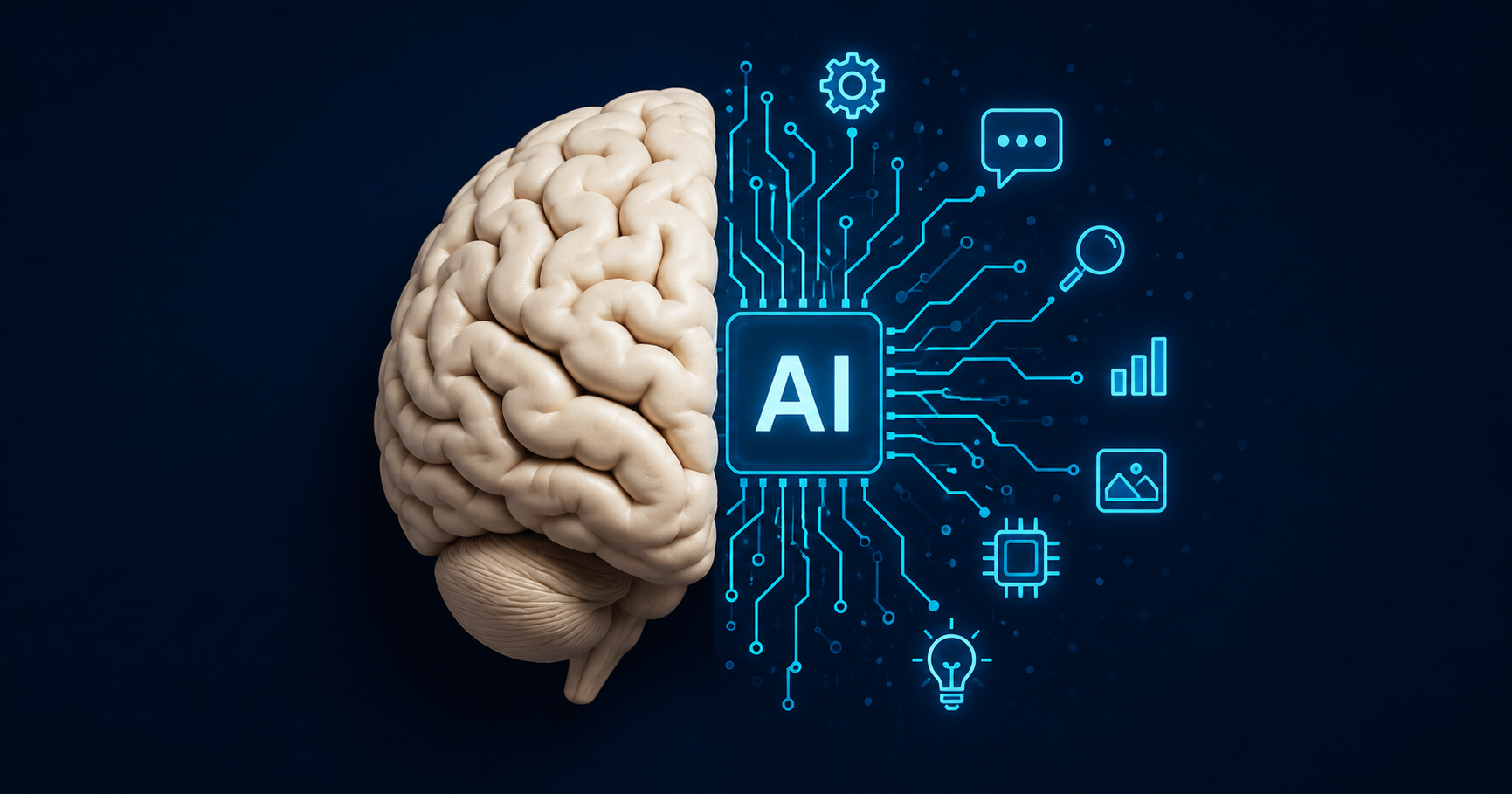
Understanding Artificial Intelligence in Everyday Life
Artificial Intelligence (AI) has become an essential part of modern technology, powering everything from movie recommendations and map navigation to medical imaging and creative writing. But what exactly is artificial intelligence under the hood, and how does it actually work?
In this beginner-friendly guide, we explain artificial intelligence in plain English—demystifying complex technical concepts like neural networks, machine learning, large language models (LLMs), and training without confusing jargon.
To begin experimenting with practical AI workflows, explore our Prompt Engineering Masterclass and our guide on Local Ollama & Llama 3 Setup.
The AI Hierarchy Explained: AI vs. Machine Learning vs. Deep Learning
| Layer | Simple Definition | Everyday Example |
|---|---|---|
| 1. Artificial Intelligence (Broadest) | Any machine or software capable of performing tasks that typically require human intelligence. | Chess-playing computer programs, automated navigation routing. |
| 2. Machine Learning (Subfield) | Systems that learn and improve from data patterns rather than following hardcoded rules. | Email spam filters learning which messages users mark as junk. |
| 3. Deep Learning (Advanced Technique) | Multi-layered artificial neural networks inspired by biological neurons in the human brain. | Facial recognition unlocking your smartphone camera. |
| 4. Generative AI & LLMs (Frontier) | Deep neural networks capable of synthesizing entirely new text, imagery, music, or code. | ChatGPT, Claude, Midjourney, Google Gemini. |
How Do Large Language Models (LLMs) Actually Work?
Modern conversational AI models (like ChatGPT and Gemini) operate on a two-phase process:
- Pre-Training on Massive Data: The model reads billions of books, websites, and articles, learning grammar, factual knowledge, and reasoning patterns by repeatedly guessing the next hidden word in a sentence.
- Fine-Tuning & Alignment (RLHF): Human researchers review and score model outputs, guiding the system to be helpful, truthful, safe, and polite.
Frequently Asked Questions (FAQs)
Is AI truly conscious or thinking like a human?
No. AI systems do not have subjective awareness, feelings, or conscious intent. They are advanced mathematical pattern-recognition models that calculate the most statistically coherent response to a given prompt.
What is the best way for a complete beginner to start using AI?
Start by using free conversational tools (like ChatGPT or Google Gemini) for daily practical tasks: summarizing long articles, planning a weekly meal plan, or drafting professional emails.