
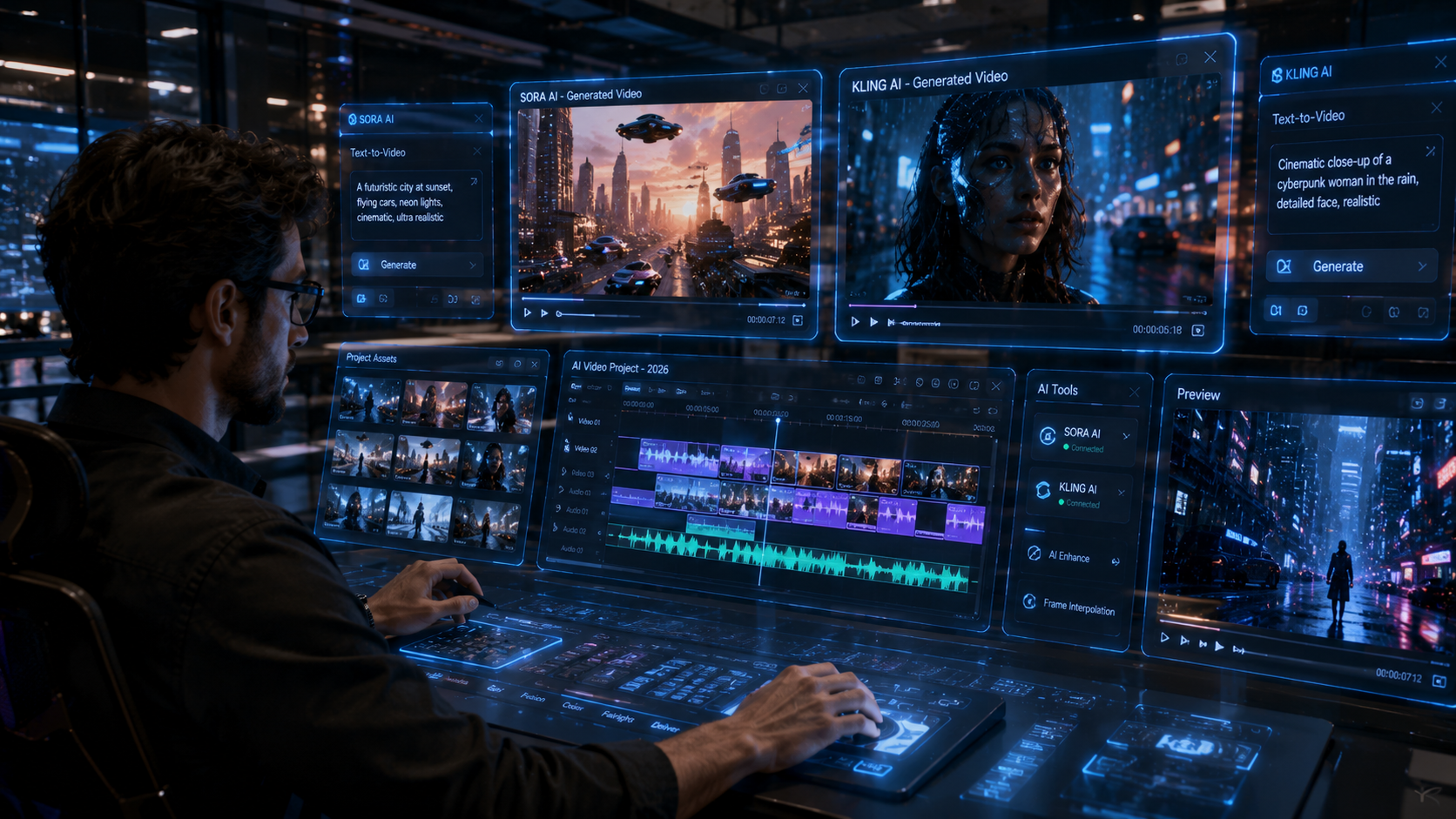
The Golden Age of AI Video Generation
AI video generation has experienced a monumental leap in visual consistency, temporal coherence, physics simulation, and resolution. Modern diffusion and autoregressive video models can generate high-definition, 60fps cinematic scenes complete with realistic lighting, complex camera movements, and synchronized spatial audio.
In this guide, we evaluate the leading AI video generators of 2026 and provide practical techniques for generating cinematic clips for marketing, entertainment, and commercial production.
Top AI Video Models Compared
| Platform | Generation Modes | Max Duration / Res | Key Strengths |
|---|---|---|---|
| Runway Gen-3 Alpha | Text-to-Video, Image-to-Video, Motion Brush | 10s / 4K Upscale | Industry-leading camera controls, multi-motion brushing, realistic human expressions. |
| OpenAI Sora | Text-to-Video, Storyboarding | 60s / 1080p | Exceptional physical world simulation, continuous multi-camera storytelling. |
| Luma Dream Machine | Text-to-Video, Keyframe Camera Interpolation | 5s–10s / 1080p | Fast generation times, natural fluid dynamics, realistic lighting transitions. |
| Kling AI | Text-to-Video, Image-to-Video | 10s–30s / 1080p | High physical realism, accurate human body mechanics, robust movement rendering. |
| Haiper AI | Text-to-Video, Repainting | 4s–8s / 1080p | Accessible pricing, intuitive community controls, stylized artistic video presets. |
How to Write Cinematic Video Prompts (The 5-Element Rule)
To produce consistent, professional cinematic clips without physical distortions, structure your video prompts using these 5 parameters:
- Shot Type & Camera Motion: “Low-angle tracking shot, slow cinematic dolly zoom, aerial sweeping drone shot.”
- Main Subject: “A classic 1970 vintage sports car with gleaming chrome reflections.”
- Action & Movement: “Drifting smoothly around a hairpin mountain curve, kicking up gravel and tire smoke.”
- Atmosphere & Lighting: “Dramatic golden hour backlighting, heavy mountain mist, lens flare.”
- Pacing & Physics: “Photorealistic motion blur, realistic suspension bounce, 35mm cinematic film grain.”
Frequently Asked Questions (FAQs)
Which method produces higher consistency: Text-to-Video or Image-to-Video?
Image-to-Video (I2V) consistently produces higher aesthetic fidelity. Generating a perfect keyframe in Midjourney or Flux first and then animating it with Runway or Kling yields superior results.
Can AI video tools generate synchronized audio?
Tools like ElevenLabs, Suno, and native multimodal video generators now synthesize ambient sound effects, Foley footsteps, and background scores directly synced to video timestamps.