
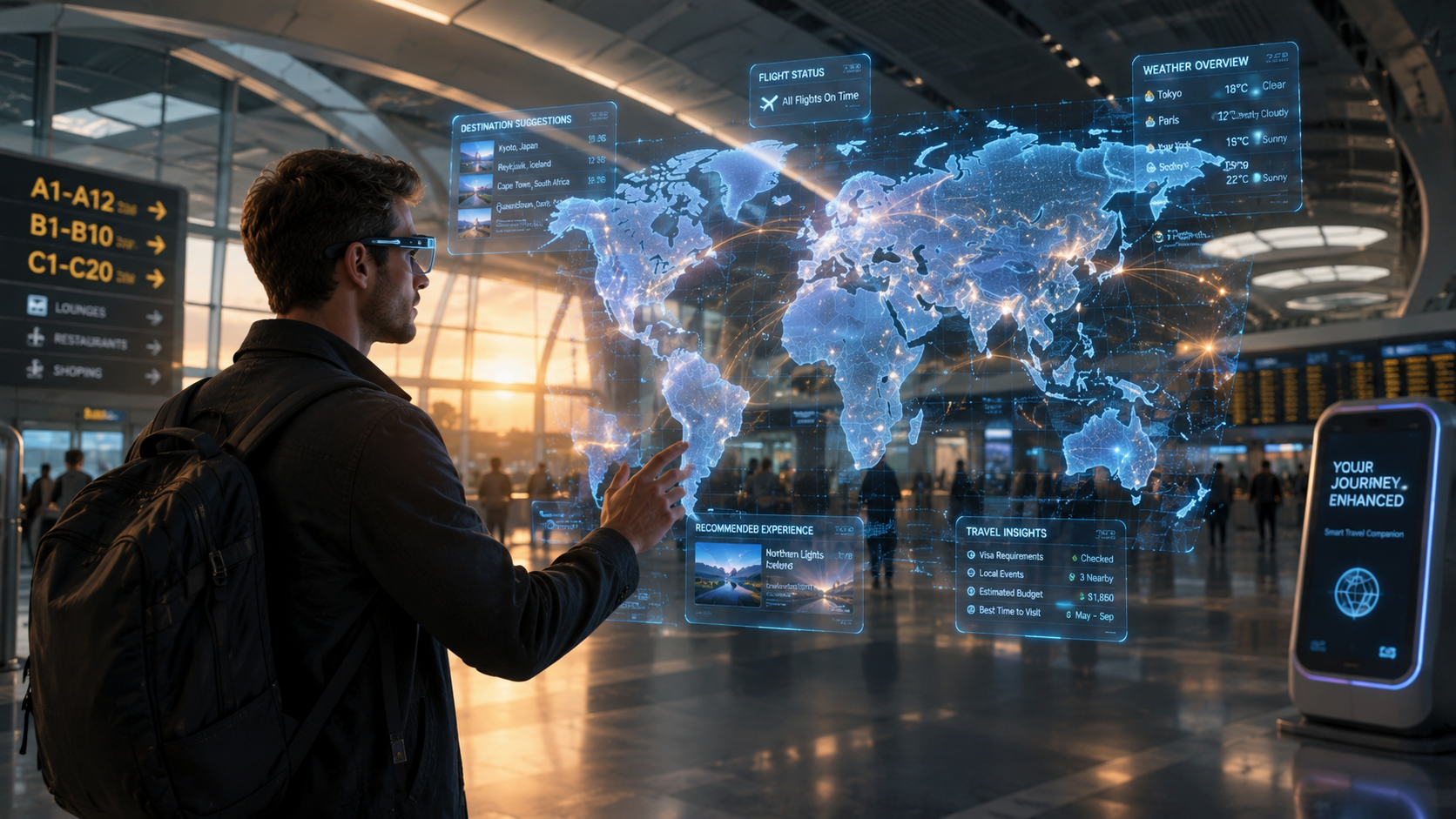
Best AI in Travel 2026: How AI Is Changing Vacation Planning
Planning a vacation used to feel like a part-time job: scrolling through dozens of hotel reviews, comparing flight prices across multiple tabs, and still ending up unsure whether you made the right choice. During my recent trip planning from Surat, I noticed how much that process has genuinely simplified. By mid-2026, AI travel tools have moved from basic search and filter to something closer to a travel assistant that understands context.
I’ve been experimenting with several AI travel planning tools this month to see how they handle complex, multi-city itineraries. This guide on AI in travel 2026 covers what’s actually useful and seamless versus what still has room to improve.
AI in Travel 2026: Personalized AI Travel Agents
The most significant development in AI in travel 2026 is the improvement in AI travel agents that can handle the full planning workflow rather than just surfacing options for you to compare manually. You can describe what you want in plain language, “a 5-day eco-friendly trip to Himachal Pradesh with a focus on local food and mid-range budget,” and these tools can pull together a coherent itinerary with flight options, accommodation suggestions, and activity recommendations that actually fit the stated constraints.
As we discuss in our Best AI Agents guide, these agents work best for well-defined goals with clear parameters. For genuinely complex itineraries with unusual requirements or niche destinations, human travel agents still bring contextual knowledge these tools occasionally miss. And while automated rebooking for simple cancellations works well, complex disruptions like multi-leg international rebooking during irregular operations still benefit from a human in the loop.
Real-Time Translation and Language Support
Language barriers have become considerably less limiting for travellers in 2026. AI-powered translation via smartphone camera or smart glasses, as we cover in our Personal AI Hardware guide, allows real-time text translation in situations like reading menus, signs, or local information boards in an unfamiliar language. Live conversational translation has also improved meaningfully, making interactions in countries with language barriers considerably more accessible.
Accuracy for common languages in standard contexts is genuinely good. For dialects, technical vocabulary, or highly colloquial speech, some caution is still warranted, but the overall improvement in accessibility for travellers who don’t speak the local language is real and practical.
Smart City Navigation and Crowd Prediction
AI-powered navigation tools in 2026 have improved significantly beyond basic turn-by-turn directions. Tools that factor in real-time crowd density, predicted wait times at attractions, and local event schedules help travellers make better decisions about timing visits to popular sites. For anyone who’s ever arrived at a famous monument at the worst possible time, this kind of predictive crowd data is genuinely useful.
These features work best in major tourist destinations where enough data exists to make predictions reliable. For off-the-beaten-path destinations, data density is lower and predictions are less reliable, which is worth keeping in mind when planning less conventional travel.
VR Previews Before Booking
The ability to take a virtual preview of a hotel room or destination before booking has become more practically accessible in AI in travel 2026. VR and 3D tour technology for hotel properties has improved, and for travellers who’ve been burned by the gap between listing photos and reality, the ability to preview a space more realistically before booking is a genuine benefit.
The technology works better for properties that have invested in high-quality 3D scanning, which skews toward higher-end and chain hotels more than budget accommodation in smaller destinations.
Sustainable Travel Planning
AI tools for sustainable travel have become more practically useful, calculating carbon footprints for different route and transport options and surfacing eco-certified accommodation more easily. As we discuss in our AI ethics guide, sustainability is a real consideration for many travellers, and having accurate carbon impact data alongside cost and convenience makes it easier to factor environmental impact into travel decisions.
TripAdvisor’s sustainability resources provide useful context on how travel platforms are approaching sustainability ratings, which is worth checking if sustainable travel is a priority for you.
Smart Hotels and Personalized Stays
AI-driven personalization within hotels has expanded in 2026. Smart room systems that adjust temperature, lighting, and entertainment preferences based on guest profiles are increasingly common at higher-end properties, and AI concierge tools available via in-room devices or hotel apps can handle common requests like restaurant bookings, spa scheduling, or local recommendations without requiring a front desk interaction.
Adoption of these features is still uneven: well-resourced international chains and boutique tech-forward properties have moved furthest, while smaller independent hotels in India and elsewhere are still catching up. The direction is positive but the experience varies significantly by property.
What This Means for Travellers from India
For travellers planning from India specifically, the most practically useful AI in travel 2026 tools right now are the booking assistants that surface the best combinations of price, timing, and preferences for popular domestic and international routes, real-time translation tools for international travel, and navigation apps with improved local context for both Indian cities and international destinations. For creating visual memories from your trips, our Best AI Video Generators guide covers tools for turning travel photos and clips into polished videos with minimal effort.
Conclusion
AI in travel 2026 has made trip planning meaningfully faster and more personalized for most travellers, while the most fully autonomous, handles-everything travel experience is still developing rather than universally delivered.
The tools that deliver the most consistent value are those focused on research, planning, and translation, where AI’s pattern recognition and language capabilities are strongest. Sustainable travel planning and smart hotel personalization are real improvements, even if adoption is still uneven across property types and destinations.
The most useful mindset is to treat AI travel tools as a highly capable research and logistics assistant, check their suggestions against reviews and current information, and keep a human backup plan for anything where disruption would be genuinely costly. At aitutorial.in, we’ll keep testing and updating our guides as these tools continue to evolve.