
Best AI in Agriculture 2026: Amazing Guide to Precision Farming

Best AI in Agriculture 2026: A Guide to Precision Farming

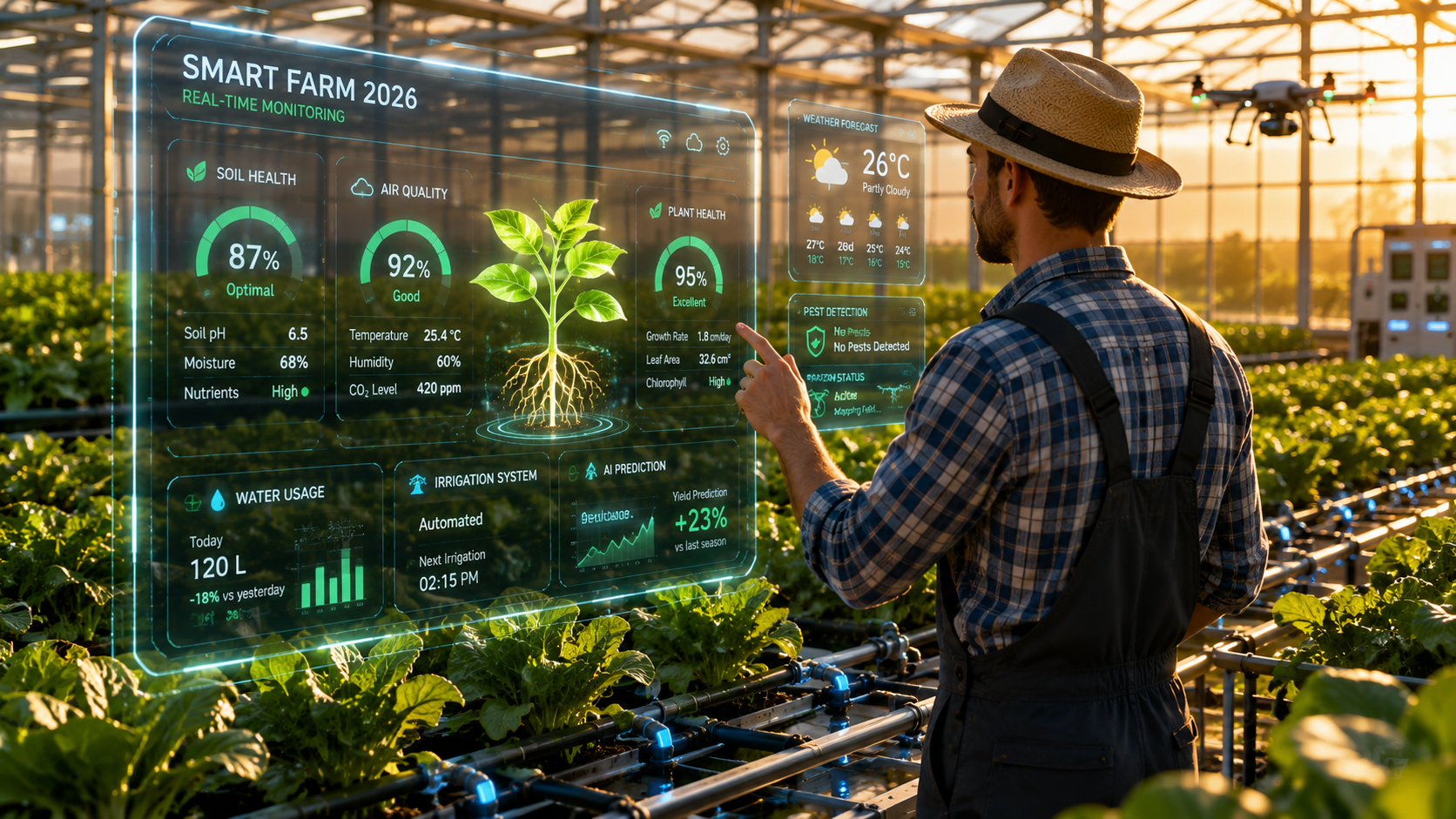
I recently visited a small farm on the outskirts of Surat and saw a drone performing soil analysis in real time. It made me think: while AI conversations often focus on software tools and office applications, some of the most practically significant work is happening in fields. By mid-2026, precision farming tools have become meaningfully more affordable and accessible for smaller farms in India, not just large commercial operations.

I’ve been researching how smart sensors, drone monitoring, and predictive models are being applied to agriculture. This guide on AI in agriculture 2026 covers what’s genuinely changing, with realistic context about adoption challenges and limitations alongside the real benefits.

AI in Agriculture 2026: Drone Monitoring and Crop Health

One of the most visible developments in AI in agriculture 2026 is the use of drones equipped with multispectral cameras for crop monitoring. These drones can cover large areas quickly, identifying early signs of pest infestation, nutrient deficiency, or water stress that would take much longer to spot through manual field inspection. Earlier detection genuinely helps farmers intervene more precisely and earlier than traditional methods allow.

The more advanced version of this, drones that automatically apply localized treatments only to affected plants, is a real capability being developed and tested, though widespread deployment at scale still requires regulatory clearances and reliable connectivity that aren’t yet universal across Indian agricultural regions. The direction is positive and the technology is real; the honest caveat is that full automation of aerial treatment is at different stages in different contexts.

AI-Driven Soil Analysis and Smart Irrigation

Water scarcity is a serious challenge for farming in Saurashtra and other dry regions of India, and AI in agriculture 2026 is providing genuinely useful tools here. Soil moisture sensors that feed data into automated irrigation systems can significantly reduce water waste compared to schedule-based irrigation, delivering water based on actual soil conditions rather than fixed timers.

As we discuss in our AI agent orchestration guide, coordinating multiple sensors and actuators in these systems is an area where agent-based approaches are being practically applied. The water savings from sensor-driven irrigation versus traditional methods are documented and meaningful, though the specific percentage varies considerably by crop type, soil, and baseline irrigation practice.

Robotic Harvesting and Sorting

Labor availability for harvest is an ongoing challenge in agriculture, and AI-powered harvesting robotics have made real progress in AI in agriculture 2026. Computer vision systems that identify ripe produce and robotic arms that can pick it without damage are in commercial use for specific crops, particularly where the produce has predictable geometry and the value per unit justifies the equipment cost.

Post-harvest AI sorting systems for quality grading are more broadly deployed than harvesting robots, since they operate in controlled environments with fixed conveyor lines rather than navigating variable field conditions. These are genuinely improving consistency and reducing manual sorting labor in packhouses.

Supply Chain and Market Forecasting

AI tools for market price prediction and demand forecasting are becoming more accessible to farmers and agricultural cooperatives in 2026. These tools analyze historical price data, seasonal patterns, and crop production estimates to help farmers make more informed decisions about planting and harvest timing. The predictions are probabilistic rather than certain, and prices are affected by factors like weather events and policy changes that are difficult to fully model, so treating these tools as useful inputs rather than guaranteed forecasts is the right approach.

Livestock Health Monitoring

Wearable sensors for livestock that track movement, health indicators, and behavioral changes have grown in adoption among larger dairy and livestock operations. Early detection of illness before visible symptoms appear can meaningfully reduce treatment costs and prevent disease spread. The technology is most cost-effective for higher-value livestock and larger operations, though costs are coming down as the devices become more common.

Vertical Farming and Controlled Environments

AI-managed controlled environment agriculture, including vertical farms, has grown as a category in AI in agriculture 2026. These systems use AI to optimize lighting schedules, nutrient delivery, and climate control for maximum yield and quality. The resource efficiency advantages of controlled environment agriculture are real, particularly for water use compared to field growing for the same crops.

The cost economics of vertical farming still work better for high-value, fast-growing crops like leafy greens and herbs than for staple crops. The Indian Council of Agricultural Research has resources on precision farming adoption in the Indian context that are worth checking for current government programs and research.

What This Means for Indian Farmers

For small and medium-scale farmers in India, the most practically accessible AI in agriculture 2026 tools right now are drone-based crop monitoring services (available through service providers without needing to own the equipment), mobile-based soil and crop advisory apps that use AI to provide recommendations, and sensor-based irrigation controllers for high-value crops where the water savings justify the upfront cost.

Government programs supporting precision agriculture adoption and cooperative models for sharing equipment costs are important for making these technologies accessible beyond large commercial farms.

Conclusion

AI in agriculture 2026 is delivering real improvements in crop monitoring, water efficiency, and early pest and disease detection, while the most fully autonomous, end-to-end AI farming vision is still developing rather than universally deployed. The technology is most impactful when it reduces the information gap between what’s actually happening in a field and what a farmer can monitor manually. At aitutorial.in, we’ll keep covering these developments practically. Check our list of Best AI Agents 2026 for the broader landscape of AI tools driving efficiency across sectors.

Leave a Comment