
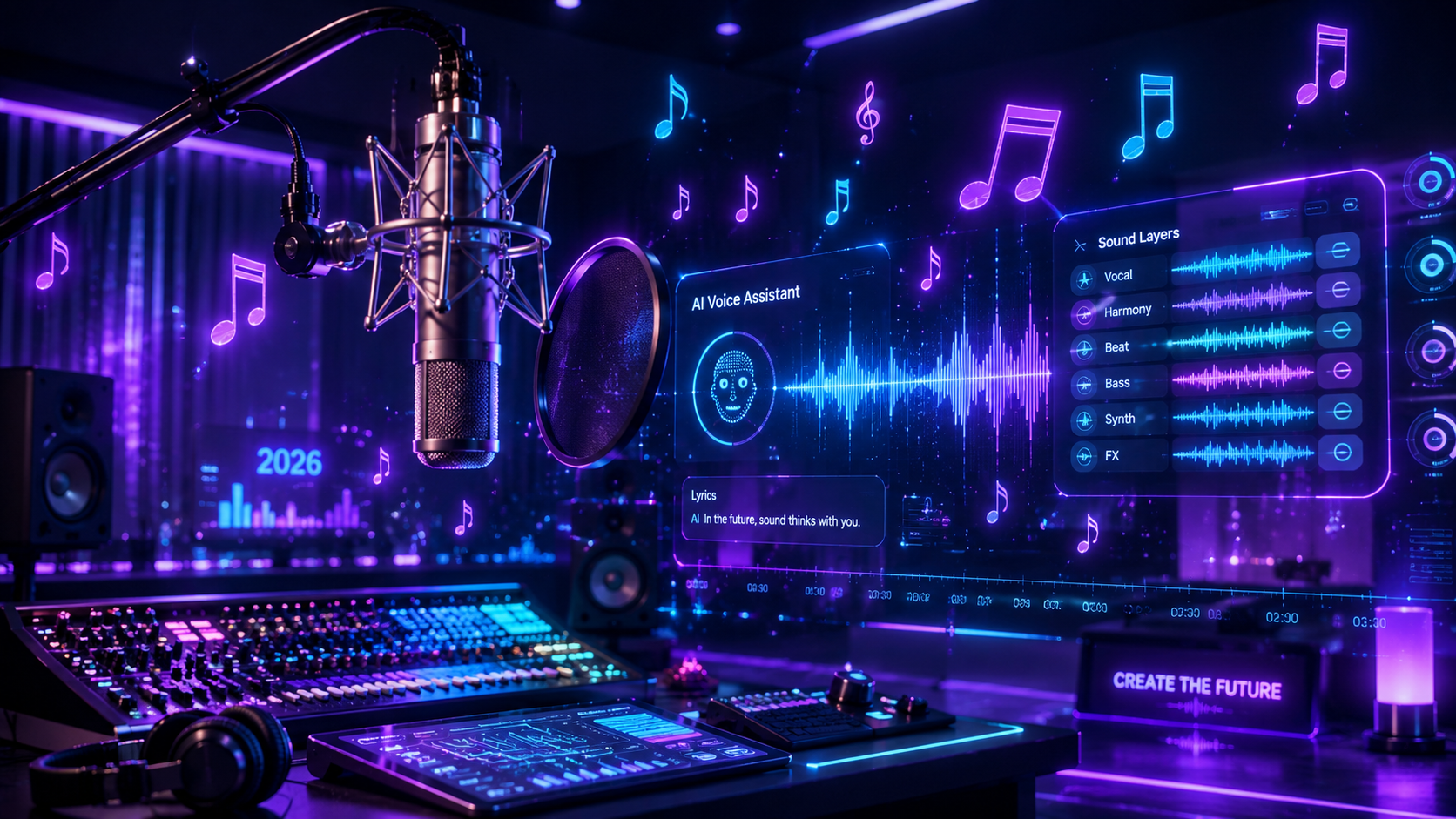
Best AI in Music 2026: Amazing New Era of Sound Generation

Best AI in Music 2026: A New Era of Sound Generation

By mid-2026, music creation has genuinely become more accessible than it has ever been. You no longer necessarily need an expensive recording studio or years of formal training to produce a track with professional-sounding production quality. The integration of AI in music 2026 has enabled people with creative ideas but limited technical training to bring those ideas to life, even if the results of AI music generation still vary considerably in quality depending on the tool and how you use it. I’ve been exploring several of these platforms recently, and this guide covers what’s genuinely useful alongside realistic context about limitations.

AI in Music 2026: Text-to-Song Generation

The most talked-about category in AI in music 2026 is text-to-song platforms, where you describe a mood, genre, and lyrical theme and receive a complete generated track. Platforms like Suno and Udio have developed into serious tools that can produce surprisingly good results for many use cases, particularly background music, demo tracks, and content creation where original royalty-free music is needed quickly.

The honest caveat is that “indistinguishable from professional recordings” overstates where things are for discerning listeners, particularly for complex arrangements, subtle emotional nuance, or genres that depend heavily on performance feel. For casual listening and content creation, the quality is genuinely impressive; for high-stakes professional releases, human musicians and producers still bring something these tools approximate rather than fully replicate.

Vocal Synthesis and AI Singers

Voice technology has advanced significantly in AI in music 2026. Vocal synthesis tools can create realistic AI voices for demos, clone an artist’s voice for personal use, or generate entirely new virtual singer personas. As we discuss in our AI in Entertainment guide, virtual artists created with these tools have found real audiences.

The ethical dimensions here matter significantly. Cloning someone else’s voice without consent raises real legal and ethical issues, and the music industry and regulators are actively working through frameworks for how consent and compensation should work when AI systems are trained on, or used to replicate, real artists’ voices. For your own voice or fully original virtual personas, these tools are interesting and accessible; for reproducing anyone else’s voice, the legal and ethical picture is still being worked out.

Real-Time Live Performance AI

Live music interaction with AI is a genuine development in AI in music 2026. DJs and electronic performers are using AI tools that analyze crowd energy signals and help adapt musical elements in real time, adjusting tempo, layering additional elements, or transitioning between tracks based on audience engagement data. This kind of real-time AI collaboration with human performers is an interesting creative direction that’s moving beyond the studio into live contexts.

AI-Powered Mastering and Post-Production

Automated audio mastering has become one of the most practically useful and widely adopted applications of AI in music 2026. Tools that analyze the frequency spectrum and dynamic range of a track and apply professional-grade mastering automatically have improved significantly, and are genuinely saving independent musicians significant studio costs. As we discuss in our Best AI Agents guide, these specialized automated tools work well for clearly defined, technical tasks with measurable quality criteria.

The results from AI mastering tools are genuinely good for most purposes, particularly for digital distribution. For specific high-end needs or unusual production styles, a human mastering engineer still brings more contextual judgment, but for most independent releases, AI mastering tools are a practical and cost-effective option.

Copyright, Ethics, and Fair Use

As we discuss in our AI ethics guide, copyright and fair compensation in AI music are genuinely contested and actively evolving. Major questions include what rights artists have when their recordings are used to train AI models, whether AI-generated music can itself be copyrighted, and how revenue should be shared when AI tools are built on vast libraries of human-created music. Some platforms are developing “fair training” agreements and revenue-sharing arrangements with rights holders, though there’s no settled universal framework yet. Staying informed about the current legal landscape in your jurisdiction before commercially releasing AI-generated music is worth doing.

AI Music Education

Learning instruments has been meaningfully improved by AI in music 2026 educational tools. Real-time audio analysis applications that listen to your playing and provide feedback on pitch, rhythm, and technique are now accessible on affordable hardware and have genuinely lowered the barrier to self-directed music learning. Whether you’re learning guitar, piano, or Indian classical instruments like sitar or tabla, these tools can provide the kind of immediate, specific feedback that would otherwise require frequent one-on-one lessons.

The tools work best as a supplement to foundational instruction rather than a complete replacement for a good teacher, particularly for understanding musical expression and nuance beyond technical correctness.

What This Means for Musicians in India

For musicians in India, particularly independent artists and producers working outside major label infrastructure, AI in music 2026 tools are making professional-quality production more financially accessible. The gap between a home studio setup and a professional studio output has genuinely narrowed. For bedroom producers in Surat, Bangalore, or anywhere else with a laptop and creative ideas, the barriers to releasing music that sounds polished are lower than they’ve ever been.

The creative and cultural dimension still depends on human artists. What AI tools provide is better access to the technical production side; the musical ideas, cultural context, and artistic voice that make music meaningful still come from the people making it.

Conclusion

AI in music 2026 has made music creation more accessible, post-production more affordable, and music education more immediate than any previous point in history. The technology works best when it handles the technical production layer while human creativity drives the musical vision and artistic decisions. At aitutorial.in, we’ve been glad to cover all 35 topics in this series. Check our guide on AI in Gaming 2026 to see how AI music is being integrated into immersive game worlds, and thank you for following along throughout this series.

Leave a Comment