
Best AI for Fitness 2026: Tools to Support Your Health Journey
I’ve tried a lot of fitness apps over the years, and most felt generic: generic workout plans, generic step counts, generic reminders. By mid-2026, the AI-driven health and fitness tools I’ve been testing have moved closer to something that actually accounts for individual variation, even if they’re still not a complete replacement for professional guidance. I’ve spent the last few weeks using real-time coaching tools and smart health trackers to understand where they genuinely help.
This guide on AI for fitness 2026 covers what’s actually useful for everyday people trying to stay healthy, with honest context about limitations, particularly for anything touching medical decisions.
Important note: This guide covers fitness and wellness tools for generally healthy adults. Always consult a qualified healthcare professional or certified fitness trainer before making significant changes to your exercise or nutrition routine, especially if you have any health conditions.
AI for Fitness 2026: Real-Time Form Coaching
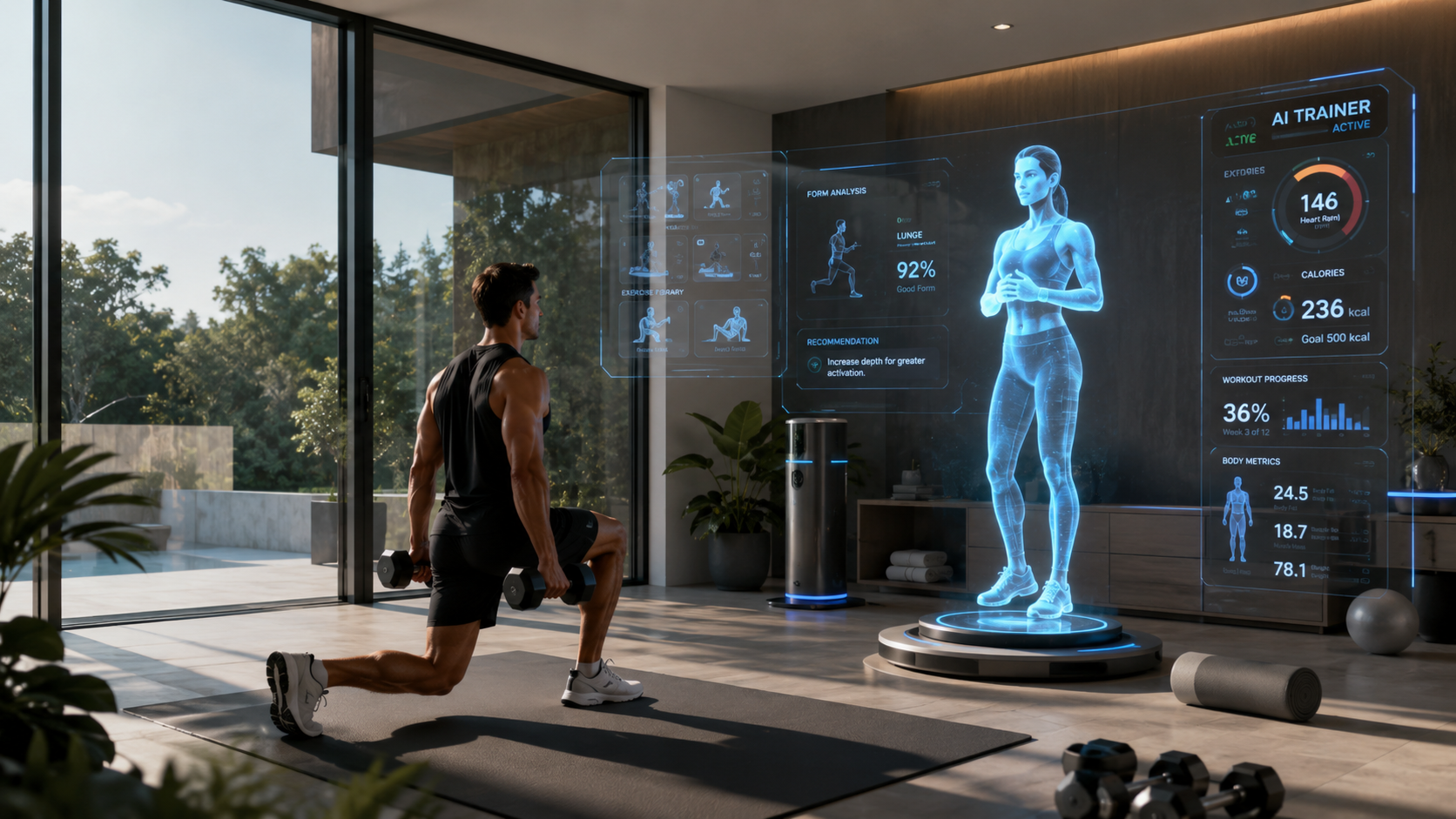
One of the more practically useful developments in AI for fitness 2026 is real-time movement analysis using smartphone cameras or dedicated wearables. These tools can analyze your form during exercises and provide feedback on posture and movement patterns, flagging potential issues that could lead to injury if left uncorrected.
As we discuss in our Personal AI Hardware guide, the hardware needed to make this work well is increasingly accessible. The honest caveat is that camera-based form analysis works better for some exercises than others, and in-person coaching from a qualified trainer still provides more nuanced, context-aware feedback for complex movements. These tools are most useful as a supplement to good coaching rather than a full replacement for it.
Personalized Nutrition Guidance
Nutrition guidance has become more personalized in AI for fitness 2026 apps, with tools that account for your activity level, dietary preferences, and health goals to suggest appropriate meal plans. Some platforms integrate with smart kitchen tools to make those recommendations more actionable.
Claims about AI analyzing your gut microbiome for personalized nutrition are an active research area, but the current science on microbiome-based dietary recommendations is still developing rather than settled, and commercial tests vary significantly in reliability. The more grounded version of this, AI that personalizes recommendations based on your tracked activity, calorie intake, and logged dietary patterns, is a practical and useful application of AI for fitness 2026. As we discuss in our AI in Healthcare guide, the distinction between wellness tools and medical guidance matters, and nutrition tools work best for generally healthy adults rather than as a substitute for dietitian guidance when there are specific health concerns.
Recovery Tracking and Sleep Optimization
Recovery monitoring is one of the areas where wearable AI for fitness 2026 tools have delivered the most consistent real-world value. Tracking heart rate variability, sleep stages, and resting heart rate trends gives meaningful signals about whether your body is recovering well or is under stress from training, illness, or poor sleep.
Using this data to adjust workout intensity or rest days is a sensible, evidence-grounded approach to training load management. The AI recommendations are most useful as one input that you apply with your own judgment rather than instructions to follow exactly, since individual variation in how people respond to training is significant.
VR and Immersive Fitness
VR fitness experiences have grown as a category, with AI-guided workouts in virtual environments that adapt difficulty based on real-time performance metrics. The gamification aspect genuinely helps with motivation for some people, and there’s real evidence that VR fitness can make exercise feel less effortful, which matters for adherence.
The most practically accessible version of this doesn’t require expensive standalone VR hardware: smartphone-based augmented reality fitness apps and interactive workout platforms provide some of the same benefits at a lower entry cost.
Smart Fabrics and Wearable Sensors
Smart fabrics with embedded sensors that track muscle activation and movement more precisely than wrist-based wearables are a real development in AI for fitness 2026, though currently more common in professional sports and research settings than in everyday consumer use. Adoption is growing as sensor costs come down, and this is worth watching as the technology becomes more accessible.
Mental Wellness Integration
The integration of mental wellness support into fitness platforms reflects a genuine shift in how fitness is understood, recognizing that recovery, stress management, and sleep quality are as important as the workouts themselves. AI-guided breathing exercises, guided meditation, and stress tracking based on physiological signals like HRV are practical additions to fitness apps that have real supporting evidence for their benefits.
The context caveat here is similar to the healthcare note: these tools are valuable for general wellness and stress management in healthy adults, but aren’t a substitute for professional mental health support when that’s what someone needs.
Choosing the Right AI Fitness Tools
The AI for fitness 2026 tools that deliver the most value tend to be the ones that fit into an already active lifestyle rather than ones that try to completely replace human judgment and professional guidance. Wearable trackers for sleep and recovery, camera-based form feedback, and personalized activity recommendations are the most mature, well-evidenced applications. VR fitness and smart fabrics are interesting emerging categories.
For most people, starting with a well-rated fitness wearable and one AI coaching app, and using them consistently for a few weeks to build habits, tends to produce better outcomes than adopting every available tool at once.
Conclusion
AI for fitness 2026 has made personalized health tracking, recovery monitoring, and form coaching meaningfully more accessible for everyday people. The tools work best as a supportive layer alongside good lifestyle fundamentals, exercise consistency, adequate sleep, balanced nutrition, and professional guidance when needed rather than as a shortcut that replaces any of those foundations. At aitutorial.in, we’ll keep testing these tools honestly. Check our list of Best AI Agents 2026 for a broader look at AI tools improving various aspects of daily life.